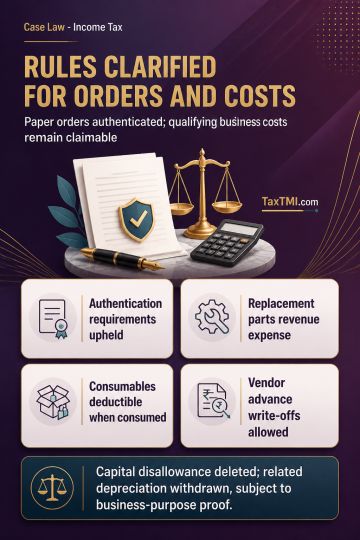
Authentication of paper assessment orders upheld, while qualifying repairs, consumables and vendor advance write-offs remain deductible business claim...
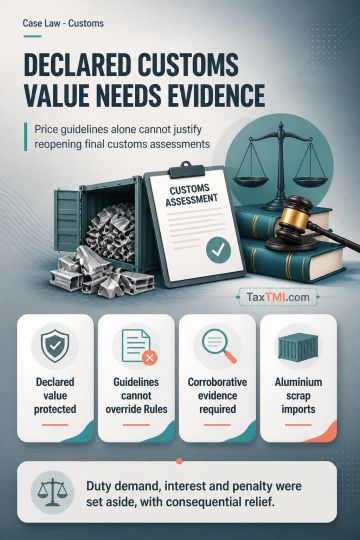
Transaction value cannot be rejected solely on non-statutory valuation guidelines without corroborative evidence supporting reassessment of final cust...
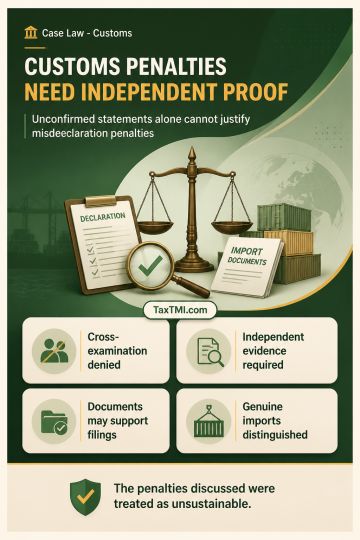
Cross-examination rights and corroborated evidence limit customs penalties for misdeclaration in genuine import transactions involving documented clea...
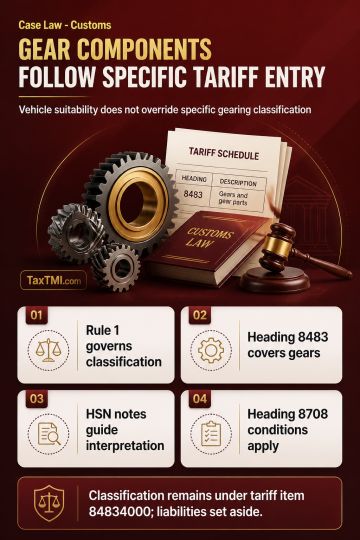
Tariff classification of vehicle gear components follows the specific gearing entry, displacing motor-vehicle parts classification and related liabili...
HC determined the invalidity of a Section 148 notice challenging the Assessing Officer's (AO) assumption regarding material advances and closing stock discrepancies. The court found that the AO erroneously interpreted material advances as an indication of understated closing stock, despite the advance being already accounted for in the revenue bill. The AO lacked jurisdiction to reopen the assessment based on information already examined during the original assessment. Consequently, the HC quashed the reassessment notice, ruling in favor of the assessee and determining that the purported stock variation could not substantiate claims of escaped income.
HC determined the invalidity of a Section 148 notice challenging the Assessing Officer's (AO) assumption regarding material advances and closing stock discrepancies. The court found that the AO erroneously interpreted material advances as an indication of understated closing stock, despite the advance being already accounted for in the revenue bill. The AO lacked jurisdiction to reopen the assessment based on information already examined during the original assessment. Consequently, the HC quashed the reassessment notice, ruling in favor of the assessee and determining that the purported stock variation could not substantiate claims of escaped income.
Note: It is a system-generated summary and is for quick reference only.
 TaxTMI
 of 4792










 Join Channel


 TaxTMI