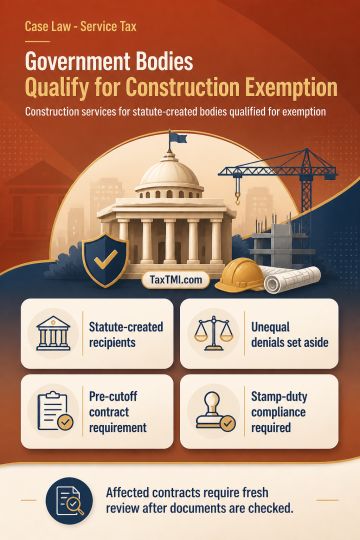
Governmental authority status supports construction-service exemption, while pre-cutoff contract and stamp-duty compliance requires verification on re...
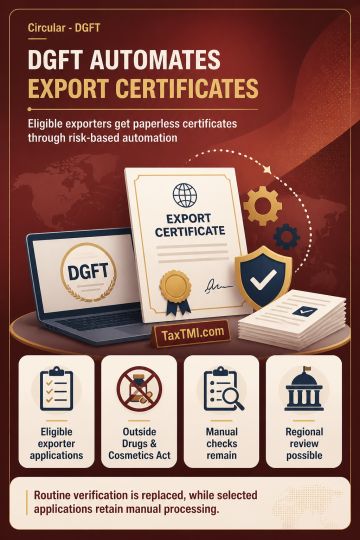
Automated Free Sale and Commerce Certificates enable paperless processing while retaining risk-based manual verification for selected exporter applica...
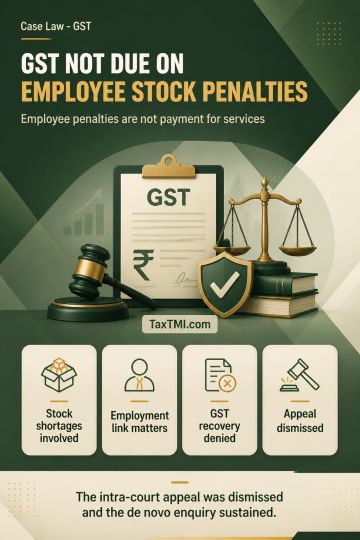
Employee stock-shortage penalties do not constitute consideration for services, preventing GST collection under Schedule II in employment relationship...
CESTAT held that the Principal Commissioner's rejection of the special warehouse license application was improper. The Tribunal found the appeal maintainable under Section 129A of the Customs Act, determining that the license rejection constituted an appealable order. While Regulation 3(2)(c) allows denial based on prior penalties, the Tribunal concluded that a single past penalty does not automatically disqualify an applicant, especially when no substantive concerns about the applicant's integrity or operational capabilities existed. The impugned order was set aside, effectively reinstating the appellant's right to seek a special warehouse license, with the Tribunal emphasizing a nuanced interpretation of regulatory disqualification criteria.
CESTAT held that the Principal Commissioner's rejection of the special warehouse license application was improper. The Tribunal found the appeal maintainable under Section 129A of the Customs Act, determining that the license rejection constituted an appealable order. While Regulation 3(2)(c) allows denial based on prior penalties, the Tribunal concluded that a single past penalty does not automatically disqualify an applicant, especially when no substantive concerns about the applicant's integrity or operational capabilities existed. The impugned order was set aside, effectively reinstating the appellant's right to seek a special warehouse license, with the Tribunal emphasizing a nuanced interpretation of regulatory disqualification criteria.
Note: It is a system-generated summary and is for quick reference only.
 TaxTMI
  TaxTMI
 of 4828





 Join Channel


