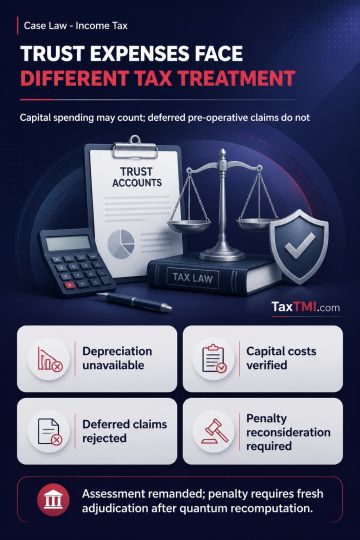
Charitable trust income application permits verified capital expenditure but rejects deferred pre-operative claims and requires reconsideration of con...
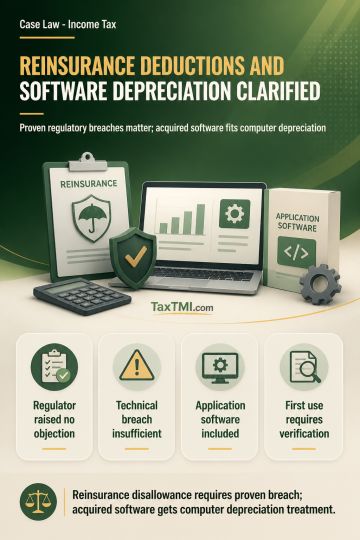
Reinsurance premium deductions require established regulatory breaches, while independently acquired software qualifies within the computer depreciati...
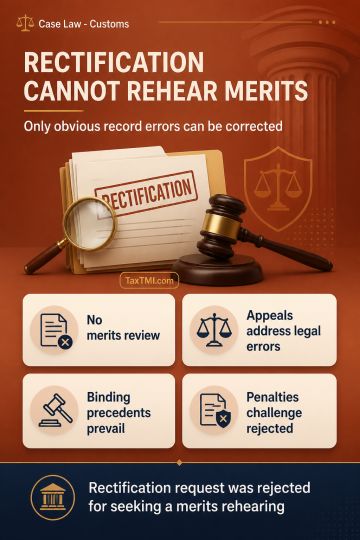
Rectification of mistake remains limited to self-evident record errors, preventing merits review through miscellaneous applications and preserving fin...
Tender creditworthiness conditions may extend to de facto Promoter Directors, with post-participation challenges generally barred absent arbitrariness...
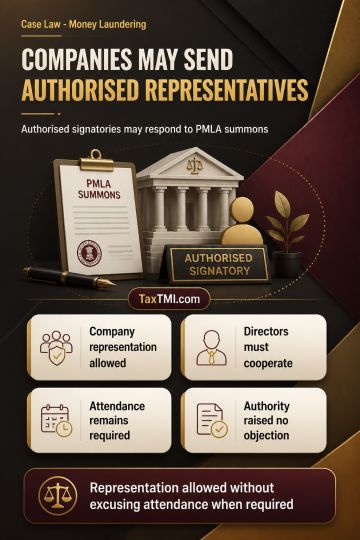
Corporate representation in PMLA summons proceedings permitted through an authorised signatory, subject to directors' continuing cooperation and atten...
HC dismissed the petition challenging a GST order, holding that the petitioner must first exhaust the statutory remedy of appeal under Section 107 of the GST Act. The court found no exceptional circumstances warranting direct judicial review, emphasizing the need to follow prescribed administrative appellate mechanisms. The petitioner was directed to file an appeal within four weeks, with the appellate authority considering the time spent in HC as valid for potential delay condonation. The petition was disposed of without examining the substantive merits of the original tax dispute.
HC dismissed the petition challenging a GST order, holding that the petitioner must first exhaust the statutory remedy of appeal under Section 107 of the GST Act. The court found no exceptional circumstances warranting direct judicial review, emphasizing the need to follow prescribed administrative appellate mechanisms. The petitioner was directed to file an appeal within four weeks, with the appellate authority considering the time spent in HC as valid for potential delay condonation. The petition was disposed of without examining the substantive merits of the original tax dispute.
Note: It is a system-generated summary and is for quick reference only.
 TaxTMI
 of 4805









 Join Channel


 TaxTMI
