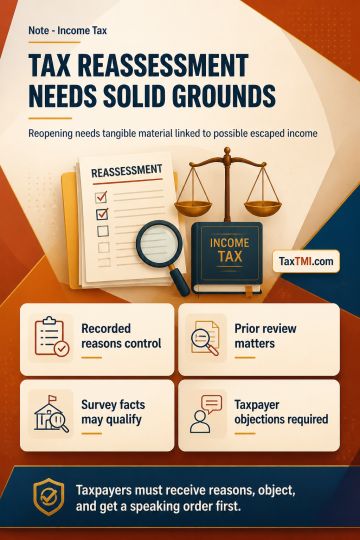
Opportunity to furnish unsecured-loan confirmations is required before reassessment initiation; proceedings require fresh consideration after taxpayer...
ITAT adjudicated a tax dispute regarding penalty u/s 271(1)(c), finding no justification for penalty imposition. The tribunal determined that returned income matched assessed income, and no substantive evidence of income concealment existed. The show cause notice lacked specific allegations of tax evasion or inaccurate income particulars. Given the absence of procedural fairness and no demonstrable intent to evade tax, the tribunal deleted the 100% penalty. The decision hinged on procedural defects and lack of clear evidence of deliberate tax non-compliance, ultimately ruling in favor of the assessee based on principles of natural justice and procedural propriety.
ITAT adjudicated a tax dispute regarding penalty u/s 271(1)(c), finding no justification for penalty imposition. The tribunal determined that returned income matched assessed income, and no substantive evidence of income concealment existed. The show cause notice lacked specific allegations of tax evasion or inaccurate income particulars. Given the absence of procedural fairness and no demonstrable intent to evade tax, the tribunal deleted the 100% penalty. The decision hinged on procedural defects and lack of clear evidence of deliberate tax non-compliance, ultimately ruling in favor of the assessee based on principles of natural justice and procedural propriety.
Note: It is a system-generated summary and is for quick reference only.
 TaxTMI
  TaxTMI
 of 4918