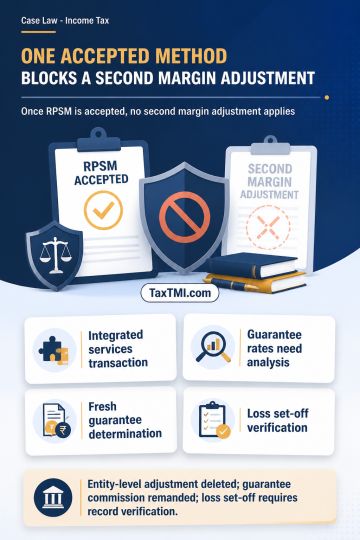
Form 26AS evidence requires successor-entity accounting verification after business transfer, while invoice-supported related-party advertising expend...
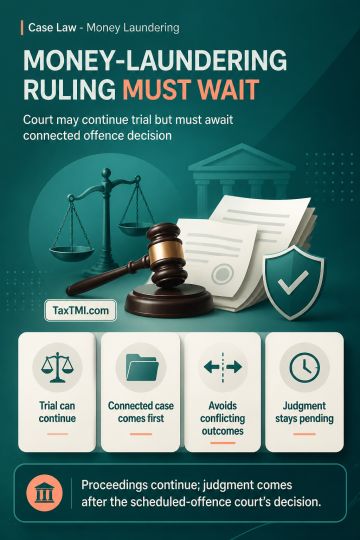
Money-laundering judgment timing requires awaiting the scheduled-offence decision despite continuation of the underlying trial where outcomes directly...
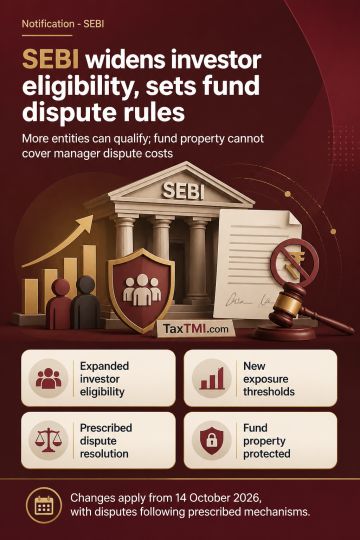
Accredited investor eligibility expands through securities-market exposure, while alternative investment fund disputes require prescribed resolution a...
Page of 4916
Press 'Enter' after typing page number.
41 to 60 of 98302 Results
❮
❯
❯❯
0 / 200
Expand Note
Add to Folder
No Folders have been created
+
Are you sure you want to delete "My most important" ?
ITAT adjudicated a tax dispute regarding penalty u/s 271(1)(c), finding no justification for penalty imposition. The tribunal determined that returned income matched assessed income, and no substantive evidence of income concealment existed. The show cause notice lacked specific allegations of tax evasion or inaccurate income particulars. Given the absence of procedural fairness and no demonstrable intent to evade tax, the tribunal deleted the 100% penalty. The decision hinged on procedural defects and lack of clear evidence of deliberate tax non-compliance, ultimately ruling in favor of the assessee based on principles of natural justice and procedural propriety.
ITAT adjudicated a tax dispute regarding penalty u/s 271(1)(c), finding no justification for penalty imposition. The tribunal determined that returned income matched assessed income, and no substantive evidence of income concealment existed. The show cause notice lacked specific allegations of tax evasion or inaccurate income particulars. Given the absence of procedural fairness and no demonstrable intent to evade tax, the tribunal deleted the 100% penalty. The decision hinged on procedural defects and lack of clear evidence of deliberate tax non-compliance, ultimately ruling in favor of the assessee based on principles of natural justice and procedural propriety.
Note: It is a system-generated summary and is for quick reference only.
 TaxTMI
  TaxTMI
 of 4916