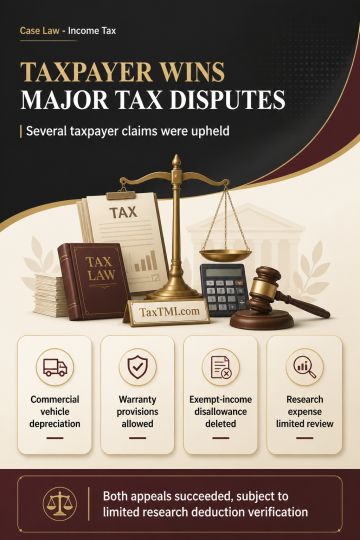
Commercial vehicle depreciation, scientifically determined warranty provisions and exempt-income disallowances were resolved in favour of the taxpayer...
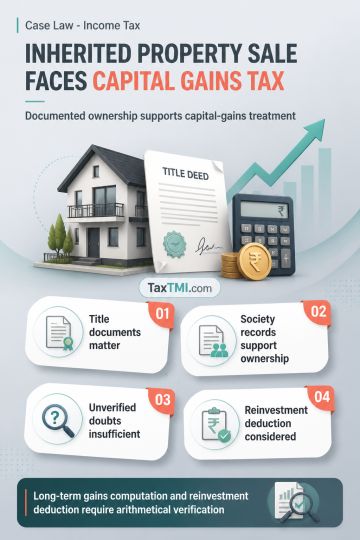
Inherited property sale proceeds require capital-gains treatment where ownership is supported by evidence, not suspicion or unverified signature doubt...
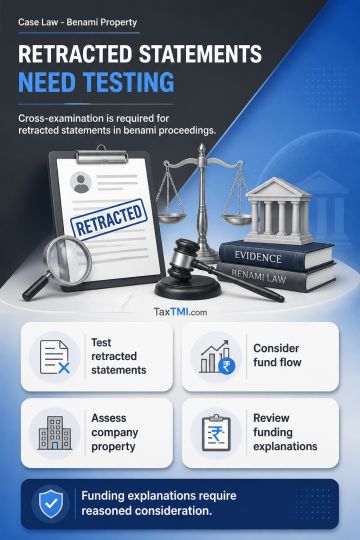
Cross-examination of retracted statements is essential where foundational evidence supports a benami allegation and documented funding explanations re...
Capital-goods exemption covers plant-modernisation accessories, while the import restriction applies only to earlier capital-goods components and spar...
ITAT adjudicated a tax dispute regarding penalty u/s 271(1)(c), finding no justification for penalty imposition. The tribunal determined that returned income matched assessed income, and no substantive evidence of income concealment existed. The show cause notice lacked specific allegations of tax evasion or inaccurate income particulars. Given the absence of procedural fairness and no demonstrable intent to evade tax, the tribunal deleted the 100% penalty. The decision hinged on procedural defects and lack of clear evidence of deliberate tax non-compliance, ultimately ruling in favor of the assessee based on principles of natural justice and procedural propriety.
ITAT adjudicated a tax dispute regarding penalty u/s 271(1)(c), finding no justification for penalty imposition. The tribunal determined that returned income matched assessed income, and no substantive evidence of income concealment existed. The show cause notice lacked specific allegations of tax evasion or inaccurate income particulars. Given the absence of procedural fairness and no demonstrable intent to evade tax, the tribunal deleted the 100% penalty. The decision hinged on procedural defects and lack of clear evidence of deliberate tax non-compliance, ultimately ruling in favor of the assessee based on principles of natural justice and procedural propriety.
Note: It is a system-generated summary and is for quick reference only.
 TaxTMI
 of 4801







 Join Channel


 TaxTMI