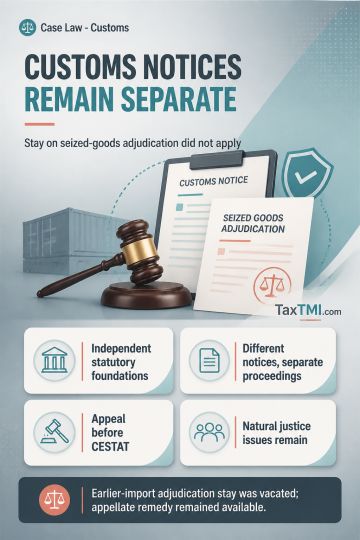
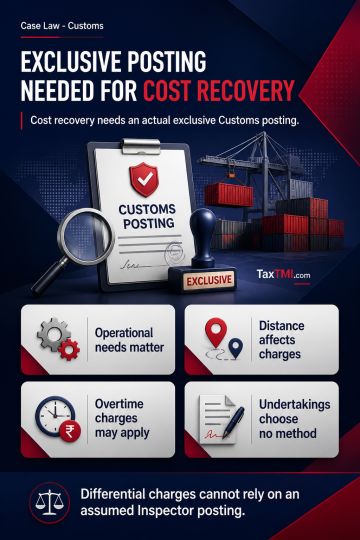
Independent show-cause notices remain separate proceedings, while customs adjudication challenges should ordinarily follow the statutory appellate rem...
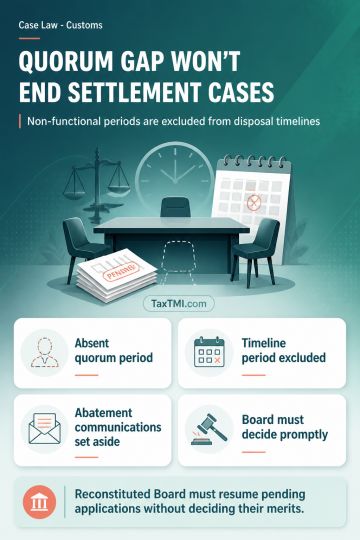
Institutional incapacity in customs settlement proceedings excludes non-functional quorum periods from statutory disposal timelines, preventing automa...
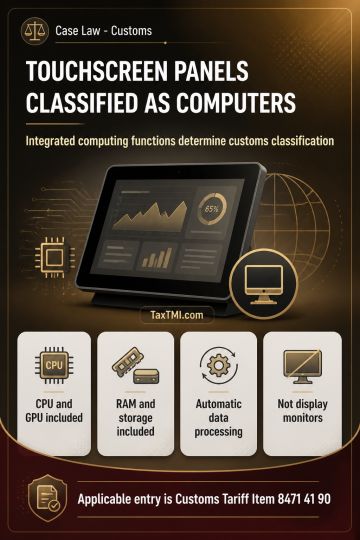
Interactive touchscreen panels with integrated computing functions fall under automatic data-processing machines rather than display monitors for cust...
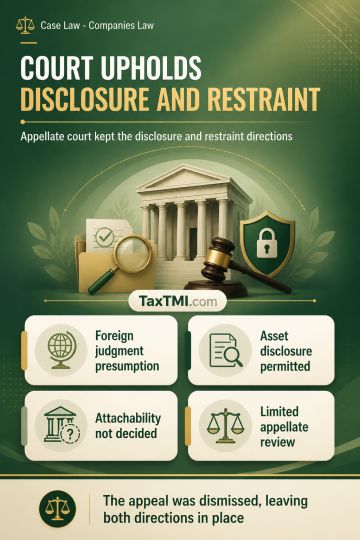
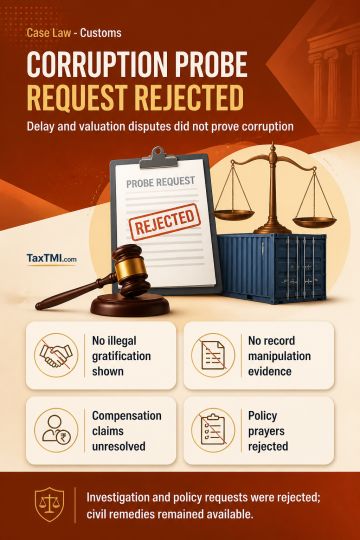
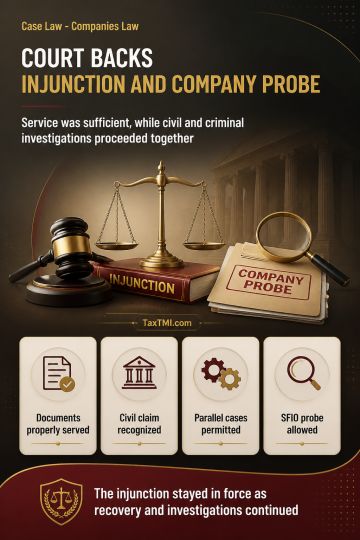
Ex parte injunction service requirements were substantially met, while civil recovery and SFIO investigation into provident fund defalcation continued...
ITAT adjudicated a tax dispute regarding penalty u/s 271(1)(c), finding no justification for penalty imposition. The tribunal determined that returned income matched assessed income, and no substantive evidence of income concealment existed. The show cause notice lacked specific allegations of tax evasion or inaccurate income particulars. Given the absence of procedural fairness and no demonstrable intent to evade tax, the tribunal deleted the 100% penalty. The decision hinged on procedural defects and lack of clear evidence of deliberate tax non-compliance, ultimately ruling in favor of the assessee based on principles of natural justice and procedural propriety.
ITAT adjudicated a tax dispute regarding penalty u/s 271(1)(c), finding no justification for penalty imposition. The tribunal determined that returned income matched assessed income, and no substantive evidence of income concealment existed. The show cause notice lacked specific allegations of tax evasion or inaccurate income particulars. Given the absence of procedural fairness and no demonstrable intent to evade tax, the tribunal deleted the 100% penalty. The decision hinged on procedural defects and lack of clear evidence of deliberate tax non-compliance, ultimately ruling in favor of the assessee based on principles of natural justice and procedural propriety.
Note: It is a system-generated summary and is for quick reference only.
 TaxTMI
 of 4801






 Join Channel


 TaxTMI