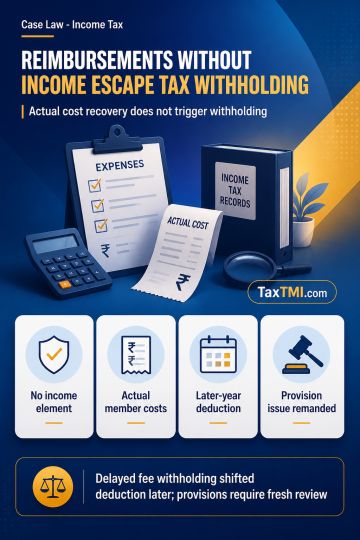
Pure reimbursement without income element escapes tax withholding, while delayed withholding and unsupported provisions face deferred or renewed scrut...
Public benefit requirement defeats charitable registration where residents' association services are reciprocal, member-only facilities governed by mu...
Exempt-income expenditure disallowance is confined to investments that actually generated exempt income, while supported business expenses remain dedu...
Objective characteristics and principal use govern mining-tyre classification, while fresh advance ruling applications may rely on additional technica...
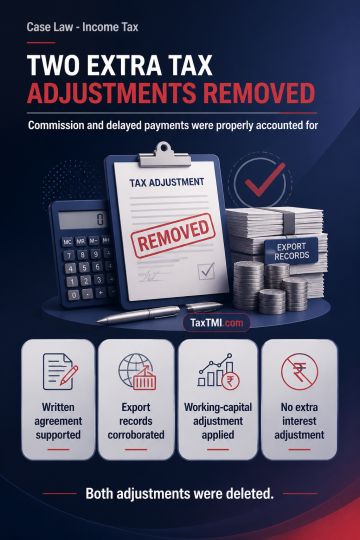
ITAT adjudicated multiple tax issues for the assessee, rendering key decisions: On bad debt deduction, ITAT held that claiming ascertained bad debt in the current assessment year is permissible, considering the tax rate remained consistent across fiscal years. The tribunal allowed the assessee's claim, finding no procedural bar in claiming the deduction. Regarding data field costs, ITAT determined these expenditures constitute direct business expenses correlated with market research fees. The tribunal accepted the assessee's submission, noting the expenditures were duly audited and represented legitimate operational costs. In transfer pricing matters, ITAT directed the AO/TPO to include a profitable comparable company in the economic analysis, rejecting persistent loss criteria. The tribunal also declined to treat provisions written back as operating income, emphasizing insufficient demonstration of direct business linkage.
ITAT adjudicated multiple tax issues for the assessee, rendering key decisions: On bad debt deduction, ITAT held that claiming ascertained bad debt in the current assessment year is permissible, considering the tax rate remained consistent across fiscal years. The tribunal allowed the assessee's claim, finding no procedural bar in claiming the deduction. Regarding data field costs, ITAT determined these expenditures constitute direct business expenses correlated with market research fees. The tribunal accepted the assessee's submission, noting the expenditures were duly audited and represented legitimate operational costs. In transfer pricing matters, ITAT directed the AO/TPO to include a profitable comparable company in the economic analysis, rejecting persistent loss criteria. The tribunal also declined to treat provisions written back as operating income, emphasizing insufficient demonstration of direct business linkage.
Note: It is a system-generated summary and is for quick reference only.
 TaxTMI
 of 4803











 Join Channel


 TaxTMI
