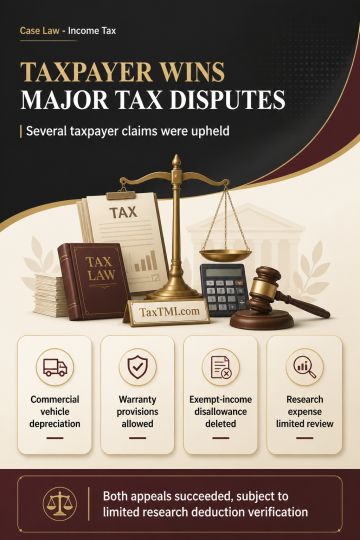
Commercial vehicle depreciation, scientifically determined warranty provisions and exempt-income disallowances were resolved in favour of the taxpayer...
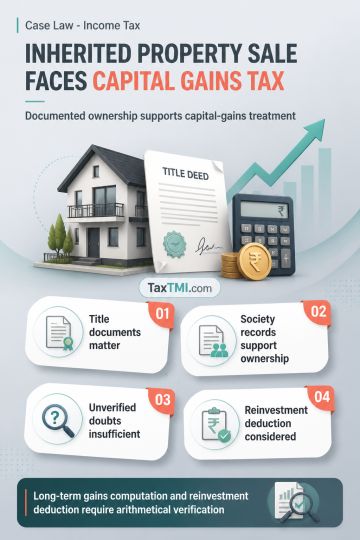
Inherited property sale proceeds require capital-gains treatment where ownership is supported by evidence, not suspicion or unverified signature doubt...
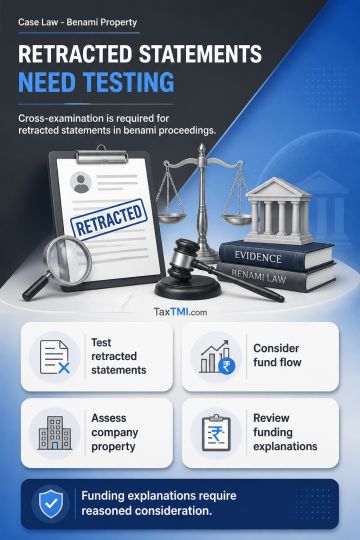
Cross-examination of retracted statements is essential where foundational evidence supports a benami allegation and documented funding explanations re...
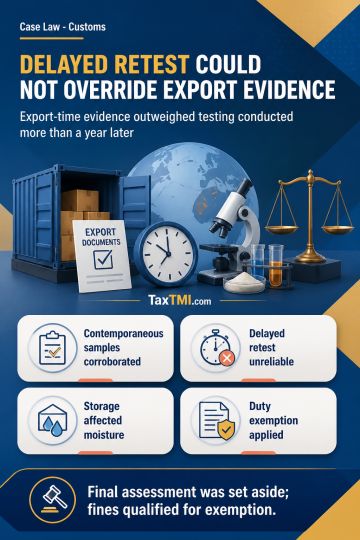
Capital-goods exemption covers plant-modernisation accessories, while the import restriction applies only to earlier capital-goods components and spar...
ITAT adjudicated multiple tax issues for the assessee, rendering key decisions: On bad debt deduction, ITAT held that claiming ascertained bad debt in the current assessment year is permissible, considering the tax rate remained consistent across fiscal years. The tribunal allowed the assessee's claim, finding no procedural bar in claiming the deduction. Regarding data field costs, ITAT determined these expenditures constitute direct business expenses correlated with market research fees. The tribunal accepted the assessee's submission, noting the expenditures were duly audited and represented legitimate operational costs. In transfer pricing matters, ITAT directed the AO/TPO to include a profitable comparable company in the economic analysis, rejecting persistent loss criteria. The tribunal also declined to treat provisions written back as operating income, emphasizing insufficient demonstration of direct business linkage.
ITAT adjudicated multiple tax issues for the assessee, rendering key decisions: On bad debt deduction, ITAT held that claiming ascertained bad debt in the current assessment year is permissible, considering the tax rate remained consistent across fiscal years. The tribunal allowed the assessee's claim, finding no procedural bar in claiming the deduction. Regarding data field costs, ITAT determined these expenditures constitute direct business expenses correlated with market research fees. The tribunal accepted the assessee's submission, noting the expenditures were duly audited and represented legitimate operational costs. In transfer pricing matters, ITAT directed the AO/TPO to include a profitable comparable company in the economic analysis, rejecting persistent loss criteria. The tribunal also declined to treat provisions written back as operating income, emphasizing insufficient demonstration of direct business linkage.
Note: It is a system-generated summary and is for quick reference only.
 TaxTMI
 of 4801









 Join Channel


 TaxTMI