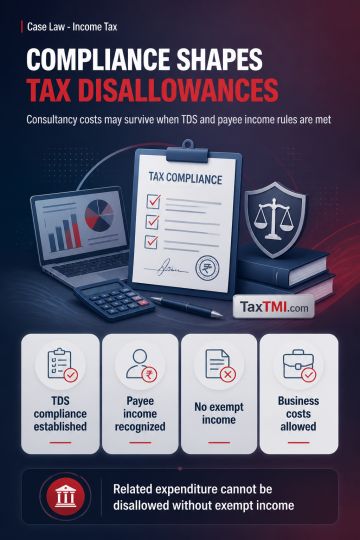
Tax deduction compliance and payee income recognition govern consultancy disallowance, while no exempt income prevents related expenditure disallowanc...
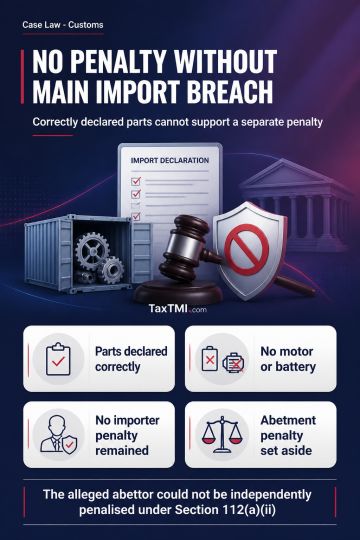
Derivative abetment liability fails when correctly declared imported components establish no underlying improper importation by the principal importer...
Page of 4805
Press 'Enter' after typing page number.
701 to 720 of 96100 Results
❮
❯
❯❯
0 / 200
Expand Note
Add to Folder
No Folders have been created
+
Are you sure you want to delete "My most important" ?
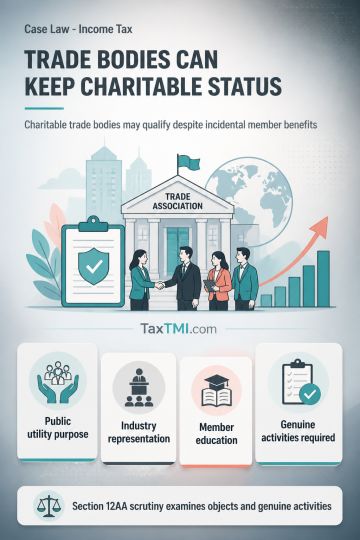
ITAT held that the assessee, a sports-focused charitable trust, qualifies for exemption under section 11 of the Income Tax Act. Despite the proviso to section 2(15), the tribunal found that the trust's activities are not commercial in nature, as it operates with consistent financial deficits and primarily promotes sports as a public utility. The trust's nominal charges merely cover operational costs, and its four-decade-long commitment to charitable objectives demonstrates no profit-making intention. Consequently, the tribunal rejected the revenue's arguments, allowing the exemption claim and dismissing the grounds raised by the revenue.
ITAT held that the assessee, a sports-focused charitable trust, qualifies for exemption under section 11 of the Income Tax Act. Despite the proviso to section 2(15), the tribunal found that the trust's activities are not commercial in nature, as it operates with consistent financial deficits and primarily promotes sports as a public utility. The trust's nominal charges merely cover operational costs, and its four-decade-long commitment to charitable objectives demonstrates no profit-making intention. Consequently, the tribunal rejected the revenue's arguments, allowing the exemption claim and dismissing the grounds raised by the revenue.
Note: It is a system-generated summary and is for quick reference only.
 TaxTMI
 of 4805










 Join Channel


 TaxTMI