Rectification of mistake remains limited to self-evident record errors, preventing merits review through miscellaneous applications and preserving fin...
Tender creditworthiness conditions may extend to de facto Promoter Directors, with post-participation challenges generally barred absent arbitrariness...
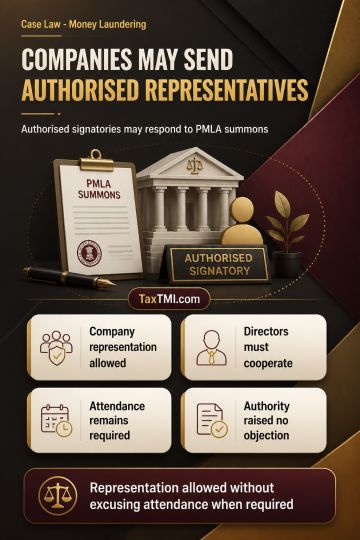
Corporate representation in PMLA summons proceedings permitted through an authorised signatory, subject to directors' continuing cooperation and atten...
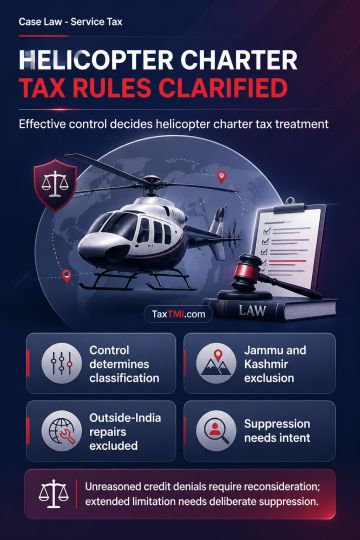
Helicopter charter classification requires effective control analysis, while territorial performance, reasoned credit orders and wilful suppression de...
Specified fund definition expands PAN exemption eligibility for registered alternative investment funds and qualifying International Financial Service...
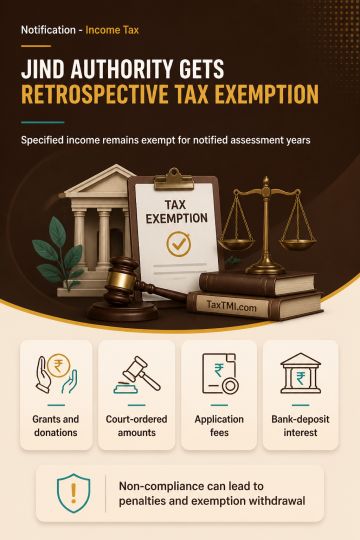
Tax exemption for specified legal-services authority income applies retrospectively, subject to non-commercial activity, unchanged income sources, and...
CESTAT examined penalty provisions under Sections 112(a) and 114AA of Customs Act, 1962. The tribunal found no substantive evidence to support penalties against the customs broker. The broker had regularly filed Bills of Entry, possessed valid KYC documents, and facilitated customs transactions without demonstrable malafide intent. Critically, no proof established direct involvement in misdeclaration or undervaluation of imported goods. The revenue failed to establish intentional abetment or deliberate misconduct. Consequently, the tribunal set aside the impugned order, ruling that penalties cannot be imposed merely on suspicion or third-party actions when due diligence requirements have been met. The appeal was allowed, quashing both penalties under the challenged sections.
CESTAT examined penalty provisions under Sections 112(a) and 114AA of Customs Act, 1962. The tribunal found no substantive evidence to support penalties against the customs broker. The broker had regularly filed Bills of Entry, possessed valid KYC documents, and facilitated customs transactions without demonstrable malafide intent. Critically, no proof established direct involvement in misdeclaration or undervaluation of imported goods. The revenue failed to establish intentional abetment or deliberate misconduct. Consequently, the tribunal set aside the impugned order, ruling that penalties cannot be imposed merely on suspicion or third-party actions when due diligence requirements have been met. The appeal was allowed, quashing both penalties under the challenged sections.
Note: It is a system-generated summary and is for quick reference only.
 TaxTMI
 of 4803








 Join Channel


 TaxTMI