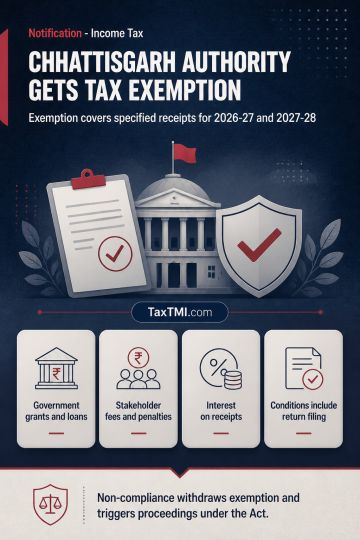
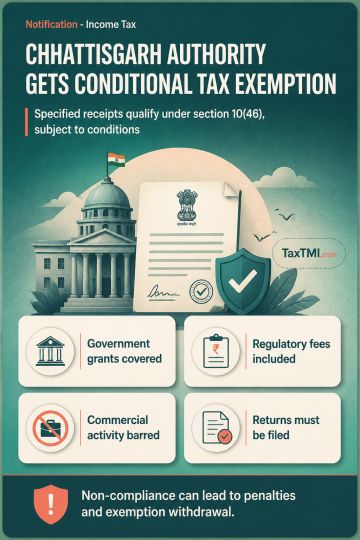
Specified regulatory authority income receives conditional tax exemption, subject to non-commercial activity, unchanged income character, and return f...
Tax exemption for regulatory authority income applies retrospectively, subject to non-commercial activity, unchanged income sources, and return-filing...
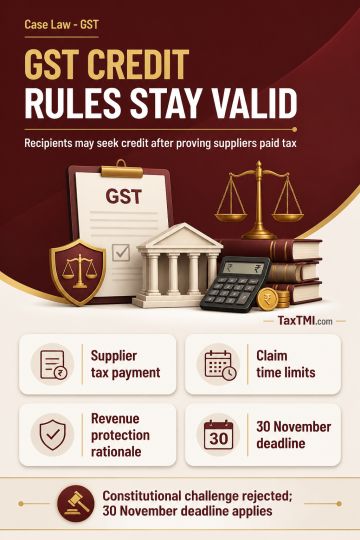
Input tax credit conditions remain constitutionally valid, with eligible recipient claims considered under GST circulars and retrospective filing dead...
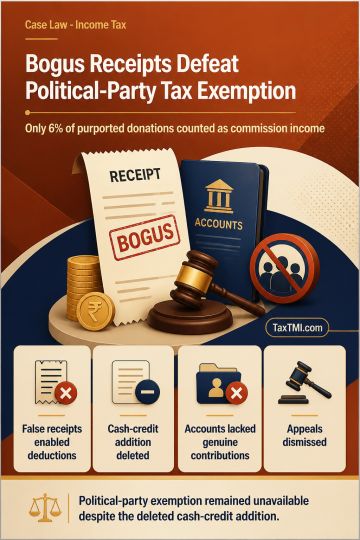
Bogus donation receipts justified commission income assessment and defeated political-party tax exemption for inaccurate accounts and reporting failur...
Pure reimbursement without income element escapes tax withholding, while delayed withholding and unsupported provisions face deferred or renewed scrut...
Public benefit requirement defeats charitable registration where residents' association services are reciprocal, member-only facilities governed by mu...
CESTAT examined penalty provisions under Sections 112(a) and 114AA of Customs Act, 1962. The tribunal found no substantive evidence to support penalties against the customs broker. The broker had regularly filed Bills of Entry, possessed valid KYC documents, and facilitated customs transactions without demonstrable malafide intent. Critically, no proof established direct involvement in misdeclaration or undervaluation of imported goods. The revenue failed to establish intentional abetment or deliberate misconduct. Consequently, the tribunal set aside the impugned order, ruling that penalties cannot be imposed merely on suspicion or third-party actions when due diligence requirements have been met. The appeal was allowed, quashing both penalties under the challenged sections.
CESTAT examined penalty provisions under Sections 112(a) and 114AA of Customs Act, 1962. The tribunal found no substantive evidence to support penalties against the customs broker. The broker had regularly filed Bills of Entry, possessed valid KYC documents, and facilitated customs transactions without demonstrable malafide intent. Critically, no proof established direct involvement in misdeclaration or undervaluation of imported goods. The revenue failed to establish intentional abetment or deliberate misconduct. Consequently, the tribunal set aside the impugned order, ruling that penalties cannot be imposed merely on suspicion or third-party actions when due diligence requirements have been met. The appeal was allowed, quashing both penalties under the challenged sections.
Note: It is a system-generated summary and is for quick reference only.
 TaxTMI
 of 4801











 Join Channel


 TaxTMI
