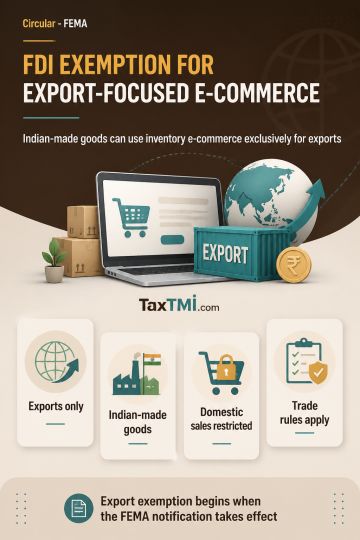
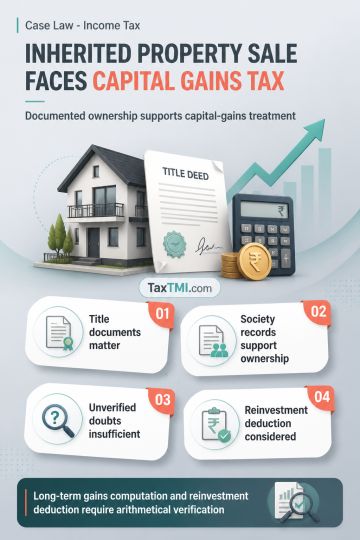
Inherited property sale proceeds require capital-gains treatment where ownership is supported by evidence, not suspicion or unverified signature doubt...
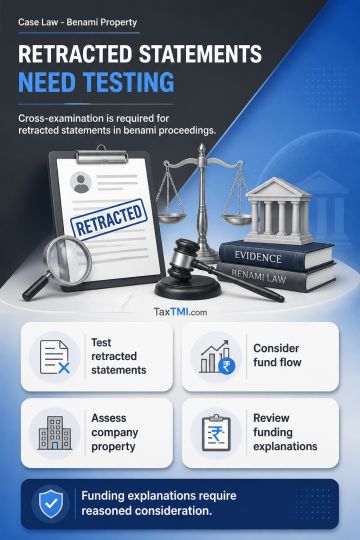
Cross-examination of retracted statements is essential where foundational evidence supports a benami allegation and documented funding explanations re...
Capital-goods exemption covers plant-modernisation accessories, while the import restriction applies only to earlier capital-goods components and spar...
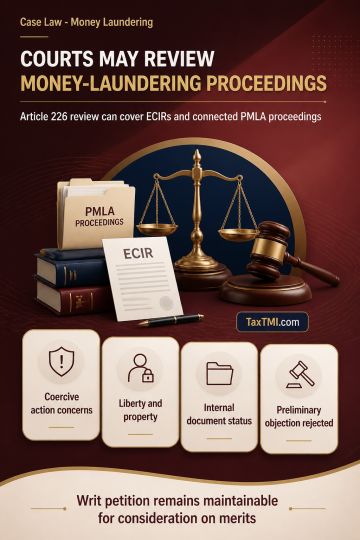
Constitutional judicial review permits challenges to ECIRs and connected money-laundering proceedings where coercive action affects fundamental intere...
HC held that when excess stock is discovered during a survey under GST Act section 67, proceedings must be initiated under sections 73/74, not section 130. The statutory framework mandates that if a registered dealer fails to account for goods, the Proper Officer shall determine tax liability through sections 73/74. The court emphasized that GST Act is a comprehensive code, and section 130 cannot be invoked when specific provisions exist for addressing undeclared stock. The petitioner's challenge to proceedings was consequently allowed, establishing a clear legal principle that excess stock discovery triggers assessment proceedings rather than punitive actions.
HC held that when excess stock is discovered during a survey under GST Act section 67, proceedings must be initiated under sections 73/74, not section 130. The statutory framework mandates that if a registered dealer fails to account for goods, the Proper Officer shall determine tax liability through sections 73/74. The court emphasized that GST Act is a comprehensive code, and section 130 cannot be invoked when specific provisions exist for addressing undeclared stock. The petitioner's challenge to proceedings was consequently allowed, establishing a clear legal principle that excess stock discovery triggers assessment proceedings rather than punitive actions.
Note: It is a system-generated summary and is for quick reference only.
 TaxTMI
 of 4805







 Join Channel


 TaxTMI