TNMM functional comparability requires excluding rice manufacturers from a pure Basmati rice trader's benchmark and recognising operating export recei...
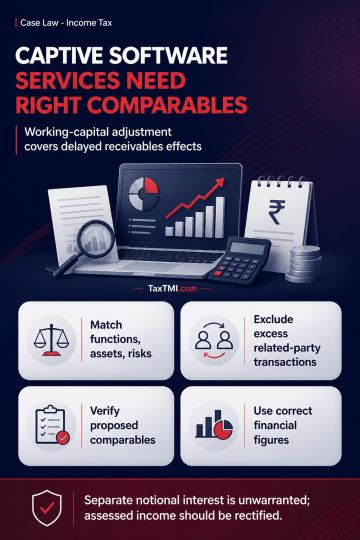
Working-capital adjustment subsumes delayed-receivable effects in TNMM benchmarking of captive software-development services, avoiding separate notion...
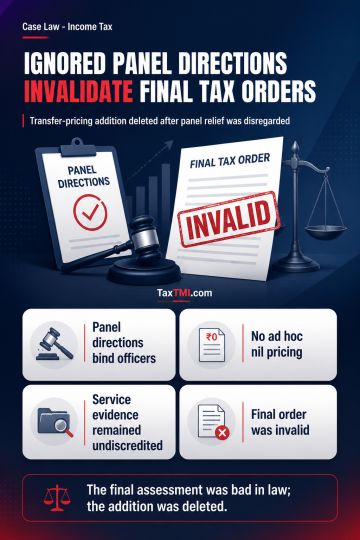
Transfer-pricing comparability requires exclusion of financially illogical super-profit comparables and correction of unsupported annual-report and ma...
Charitable character assessment preserves Section 80G approval despite inclusive spiritual teachings and incidental religious expenditure within the s...
Penalty proceedings for cash-loan acceptance require assessment proceedings and recorded Assessing Officer satisfaction; absent these, the proceedings...
Functional comparability governs software-service benchmarking: dissimilar companies are excluded, while related-party filters, margins and working-ca...
CESTAT adjudicated an import classification dispute involving optical fiber cables, addressing significant procedural delays. The tribunal found the customs adjudication order was passed after an unreasonable 13-year delay from the initial show cause notice, rendering the demand unsustainable. Referencing precedential judicial guidance, specifically the Bombay HC ruling in a similar matter involving prolonged administrative inaction, the tribunal emphasized the legal principle that excessive administrative delay invalidates subsequent enforcement actions. Consequently, the tribunal allowed the importer's appeal, effectively setting aside the customs demand due to the revenue department's unexplained and inordinate procedural postponement, thereby upholding principles of administrative fairness and time-bound regulatory processes.
CESTAT adjudicated an import classification dispute involving optical fiber cables, addressing significant procedural delays. The tribunal found the customs adjudication order was passed after an unreasonable 13-year delay from the initial show cause notice, rendering the demand unsustainable. Referencing precedential judicial guidance, specifically the Bombay HC ruling in a similar matter involving prolonged administrative inaction, the tribunal emphasized the legal principle that excessive administrative delay invalidates subsequent enforcement actions. Consequently, the tribunal allowed the importer's appeal, effectively setting aside the customs demand due to the revenue department's unexplained and inordinate procedural postponement, thereby upholding principles of administrative fairness and time-bound regulatory processes.
Note: It is a system-generated summary and is for quick reference only.
 TaxTMI
  TaxTMI
 of 4830















 Join Channel


