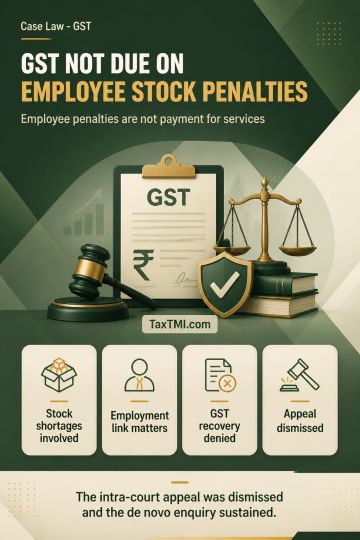
Employee stock-shortage penalties do not constitute consideration for services, preventing GST collection under Schedule II in employment relationship...
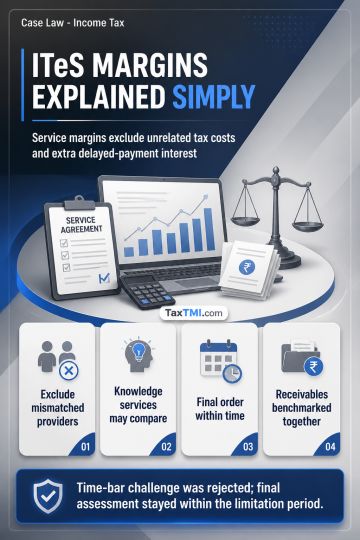
Transfer-pricing treatment of ITeS margins excludes pass-through tax recoveries and separate delayed-receivables interest after working-capital adjust...
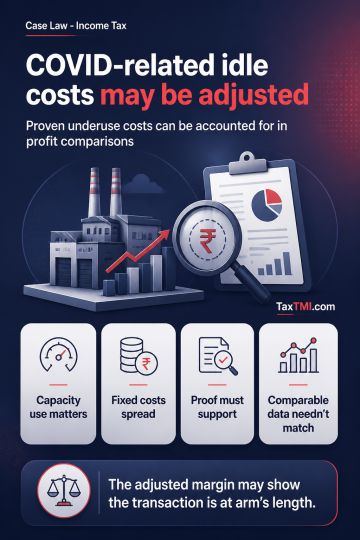
Capacity-utilisation adjustments under TNMM can neutralise substantiated COVID-related idle costs where underutilisation materially affects profitabil...
Page of 4830
Press 'Enter' after typing page number.
181 to 200 of 96587 Results
❮
❯
❯❯
0 / 200
Expand Note
Add to Folder
No Folders have been created
+
Are you sure you want to delete "My most important" ?
CESTAT adjudicated an import classification dispute involving optical fiber cables, addressing significant procedural delays. The tribunal found the customs adjudication order was passed after an unreasonable 13-year delay from the initial show cause notice, rendering the demand unsustainable. Referencing precedential judicial guidance, specifically the Bombay HC ruling in a similar matter involving prolonged administrative inaction, the tribunal emphasized the legal principle that excessive administrative delay invalidates subsequent enforcement actions. Consequently, the tribunal allowed the importer's appeal, effectively setting aside the customs demand due to the revenue department's unexplained and inordinate procedural postponement, thereby upholding principles of administrative fairness and time-bound regulatory processes.
CESTAT adjudicated an import classification dispute involving optical fiber cables, addressing significant procedural delays. The tribunal found the customs adjudication order was passed after an unreasonable 13-year delay from the initial show cause notice, rendering the demand unsustainable. Referencing precedential judicial guidance, specifically the Bombay HC ruling in a similar matter involving prolonged administrative inaction, the tribunal emphasized the legal principle that excessive administrative delay invalidates subsequent enforcement actions. Consequently, the tribunal allowed the importer's appeal, effectively setting aside the customs demand due to the revenue department's unexplained and inordinate procedural postponement, thereby upholding principles of administrative fairness and time-bound regulatory processes.
Note: It is a system-generated summary and is for quick reference only.
 TaxTMI
  TaxTMI
 of 4830







 Join Channel


