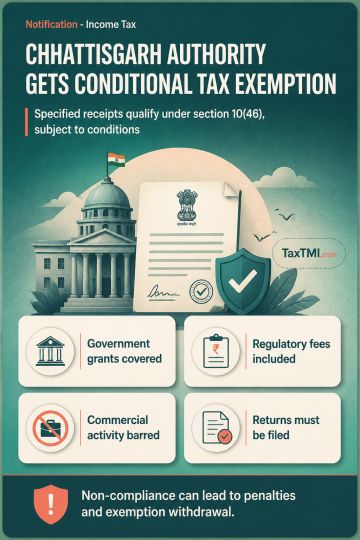
Specified regulatory authority income receives conditional tax exemption, subject to non-commercial activity, unchanged income character, and return f...
Tax exemption for regulatory authority income applies retrospectively, subject to non-commercial activity, unchanged income sources, and return-filing...
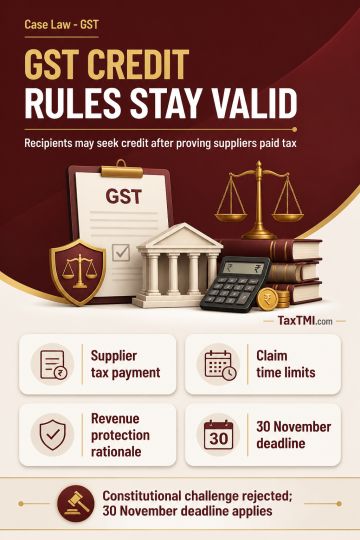
Input tax credit conditions remain constitutionally valid, with eligible recipient claims considered under GST circulars and retrospective filing dead...
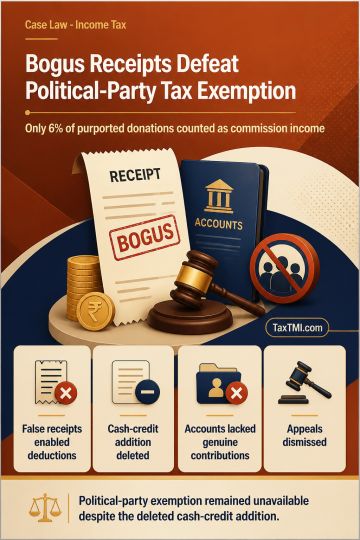
Bogus donation receipts justified commission income assessment and defeated political-party tax exemption for inaccurate accounts and reporting failur...
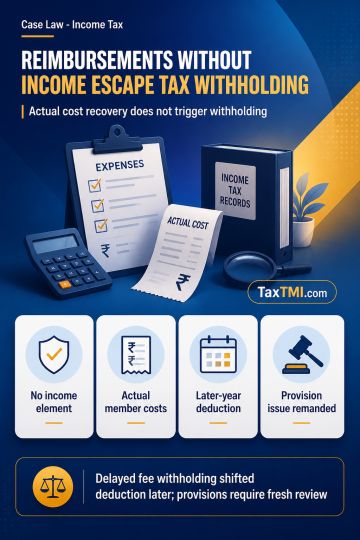
Pure reimbursement without income element escapes tax withholding, while delayed withholding and unsupported provisions face deferred or renewed scrut...
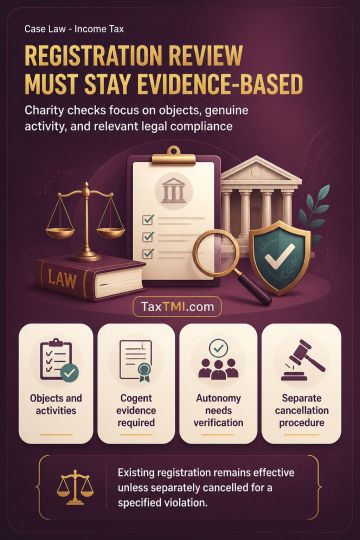
Public benefit requirement defeats charitable registration where residents' association services are reciprocal, member-only facilities governed by mu...
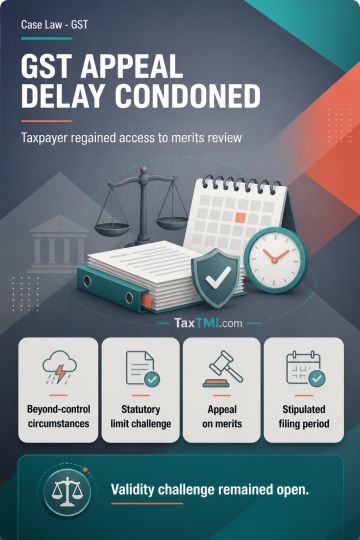
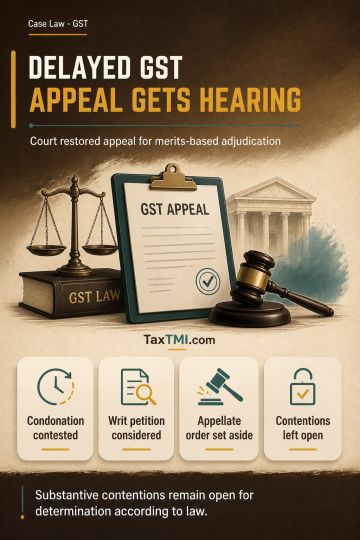
HC allowed the appeal, finding the filing procedurally valid despite delay in certified copy submission. The court determined that online filing with electronic documents constitutes complete submission, and physical certification is not mandatory. Relying on precedent from Chegg India Private Limited, the HC held that technological advancements in filing systems should be interpreted liberally. The subsequent amendment to Rule 108(3) of CGST Rules, 2017 supports retrospective application, thereby validating the appellant's original submission. The court emphasized that technical procedural requirements should not impede substantive hearing of appeals on merits.
HC allowed the appeal, finding the filing procedurally valid despite delay in certified copy submission. The court determined that online filing with electronic documents constitutes complete submission, and physical certification is not mandatory. Relying on precedent from Chegg India Private Limited, the HC held that technological advancements in filing systems should be interpreted liberally. The subsequent amendment to Rule 108(3) of CGST Rules, 2017 supports retrospective application, thereby validating the appellant's original submission. The court emphasized that technical procedural requirements should not impede substantive hearing of appeals on merits.
Note: It is a system-generated summary and is for quick reference only.
 TaxTMI
 of 4805






 Join Channel


 TaxTMI