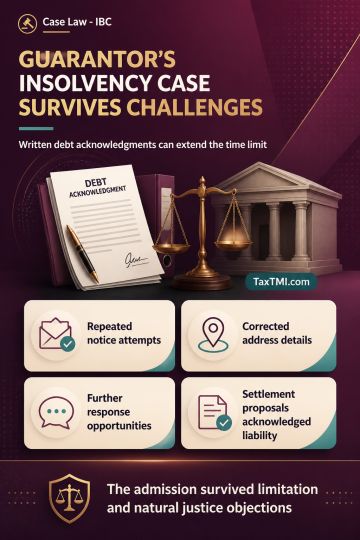
Service of notice and contractual debt acknowledgment preserved insolvency admission against a corporate guarantor despite limitation and natural just...
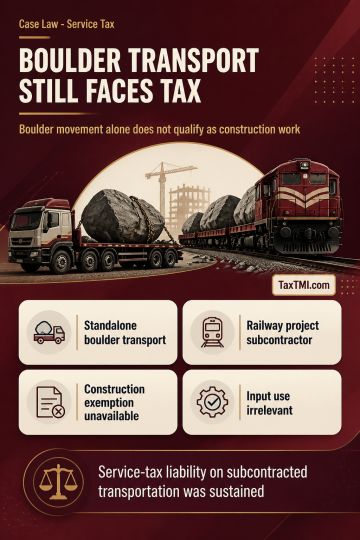
Original works exemption excludes standalone boulder transportation, leaving subcontracted railway-project transport services subject to service tax l...
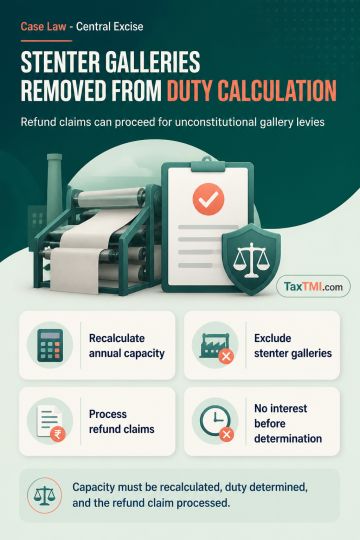
Annual production capacity determinations excluding stenter galleries support refunds for unconstitutional excise levies without an unjust-enrichment ...
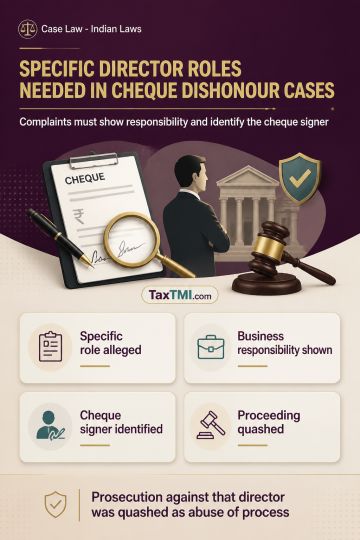
Vicarious liability for cheque dishonour requires specific allegations of responsibility and cheque signatory; generic director allegations cannot sus...
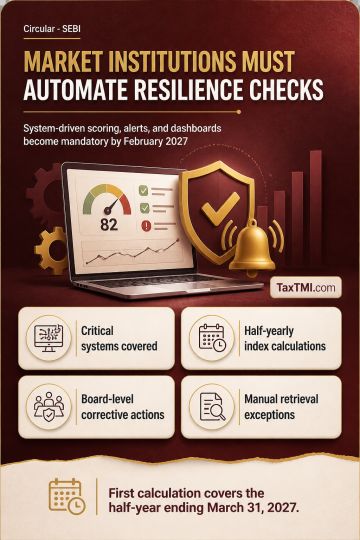
IT Resilience Index requires market infrastructure institutions to automate resilience scoring, early warnings, and continuous service-delivery monito...
SC held that stamp vendors are public servants under the Prevention of Corruption Act. The Court adopted a purposive interpretation of "public servant" definition, emphasizing the nature of public duty performed. The appellant's status as a government-remunerated stamp vendor facilitating revenue collection qualifies him as a public servant. However, the prosecution failed to establish beyond reasonable doubt the demand and acceptance of illegal gratification. Consequently, the Court set aside the conviction under Sections 7 and 13(1)(d) read with Section 13(2) of the PC Act, finding insufficient evidence to prove bribery. The appeal was allowed, quashing the trial court and high court's previous convictions.
SC held that stamp vendors are public servants under the Prevention of Corruption Act. The Court adopted a purposive interpretation of "public servant" definition, emphasizing the nature of public duty performed. The appellant's status as a government-remunerated stamp vendor facilitating revenue collection qualifies him as a public servant. However, the prosecution failed to establish beyond reasonable doubt the demand and acceptance of illegal gratification. Consequently, the Court set aside the conviction under Sections 7 and 13(1)(d) read with Section 13(2) of the PC Act, finding insufficient evidence to prove bribery. The appeal was allowed, quashing the trial court and high court's previous convictions.
Note: It is a system-generated summary and is for quick reference only.
 TaxTMI
  TaxTMI
 of 4828





 Join Channel