Jurisdictional facts in certificate-of-origin discrepancies can support customs show-cause proceedings, leaving factual explanations for departmental ...
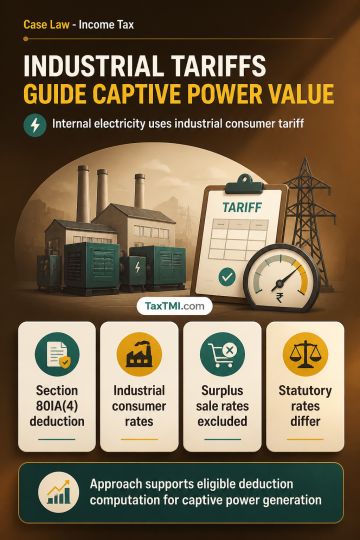
Market value for captive electricity consumption follows industrial consumer tariffs, supporting profit computation for the power generation deduction...
HC allowed the writ petition, setting aside the appeal and assessment orders. The court held that under Section 16(4) of the CGST Act, the petitioner was entitled to claim input tax credit for Financial Years 2017-2018 through 2020-2021, which was previously rejected. The credit was sought within the prescribed timeline of 30.11.2021, specifically on 31.10.2019. The matter was remanded to the first respondent to issue a fresh assessment order in accordance with Section 16(5) of the CGST Act, ensuring compliance with statutory provisions governing input tax credit claims.
HC allowed the writ petition, setting aside the appeal and assessment orders. The court held that under Section 16(4) of the CGST Act, the petitioner was entitled to claim input tax credit for Financial Years 2017-2018 through 2020-2021, which was previously rejected. The credit was sought within the prescribed timeline of 30.11.2021, specifically on 31.10.2019. The matter was remanded to the first respondent to issue a fresh assessment order in accordance with Section 16(5) of the CGST Act, ensuring compliance with statutory provisions governing input tax credit claims.
Note: It is a system-generated summary and is for quick reference only.
 TaxTMI
 of 4805

















 Join Channel


 TaxTMI