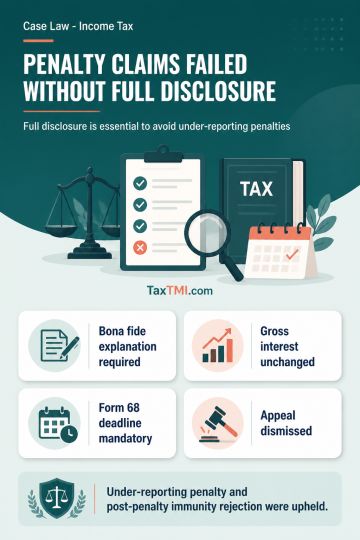
Bona fide disclosure requirements govern under-reporting penalties, and post-penalty immunity applications cannot secure available statutory protectio...
Certificate-of-origin verification procedure governs preferential customs benefits; denial without retroactive verification was set aside with consequ...
Disciplinary Committee jurisdiction and mandatory investigation requirements invalidated cancellation of an insolvency professional's registration and...
HC ruled that the petitioner's refund claim for accumulated ITC was improperly rejected. Applying precedent from Patanjali case, the court held that filing a refund application after 18.07.2022 does not automatically disqualify an applicant from seeking refund within the statutory two-year limitation period. The notification creating an arbitrary classification among assessees based on filing date was deemed invalid. Consequently, the court quashed the rejection orders dated 24.02.2023 and 30.01.2023, thereby allowing the petitioner's refund claim and upholding the statutory right to file claims within the prescribed time limit.
HC ruled that the petitioner's refund claim for accumulated ITC was improperly rejected. Applying precedent from Patanjali case, the court held that filing a refund application after 18.07.2022 does not automatically disqualify an applicant from seeking refund within the statutory two-year limitation period. The notification creating an arbitrary classification among assessees based on filing date was deemed invalid. Consequently, the court quashed the rejection orders dated 24.02.2023 and 30.01.2023, thereby allowing the petitioner's refund claim and upholding the statutory right to file claims within the prescribed time limit.
Note: It is a system-generated summary and is for quick reference only.
 TaxTMI
 of 4805














 Join Channel


 TaxTMI
