Vicarious liability for dishonoured company cheques may extend to non-signatory directors where complaints contain foundational responsibility avermen...
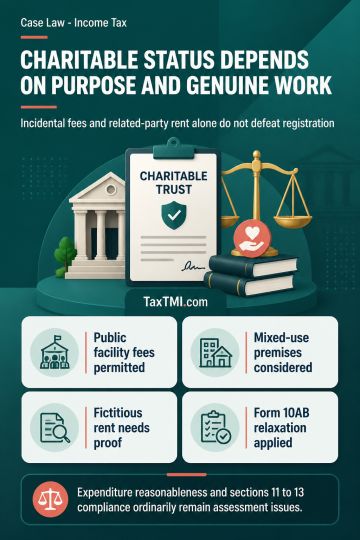
Charitable registration turns on predominant purpose and genuine activities, while incidental fees and related-party rent require supporting adverse m...
MAT book-profit adjustments exclude disallowances for exempt-income expenditure and demerger expenditure unless expressly listed under the statutory c...
HC ruled that the petitioner's refund claim for accumulated ITC was improperly rejected. Applying precedent from Patanjali case, the court held that filing a refund application after 18.07.2022 does not automatically disqualify an applicant from seeking refund within the statutory two-year limitation period. The notification creating an arbitrary classification among assessees based on filing date was deemed invalid. Consequently, the court quashed the rejection orders dated 24.02.2023 and 30.01.2023, thereby allowing the petitioner's refund claim and upholding the statutory right to file claims within the prescribed time limit.
HC ruled that the petitioner's refund claim for accumulated ITC was improperly rejected. Applying precedent from Patanjali case, the court held that filing a refund application after 18.07.2022 does not automatically disqualify an applicant from seeking refund within the statutory two-year limitation period. The notification creating an arbitrary classification among assessees based on filing date was deemed invalid. Consequently, the court quashed the rejection orders dated 24.02.2023 and 30.01.2023, thereby allowing the petitioner's refund claim and upholding the statutory right to file claims within the prescribed time limit.
Note: It is a system-generated summary and is for quick reference only.
 TaxTMI
 of 4792







 Join Channel


 TaxTMI
