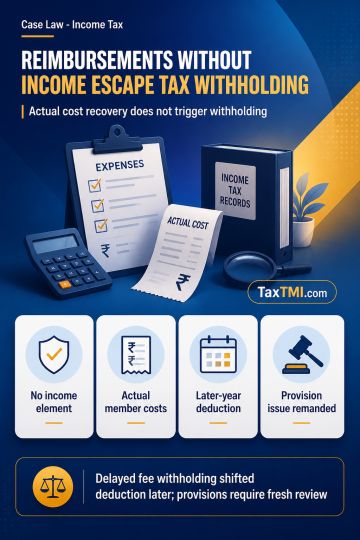
Pure reimbursement without income element escapes tax withholding, while delayed withholding and unsupported provisions face deferred or renewed scrut...
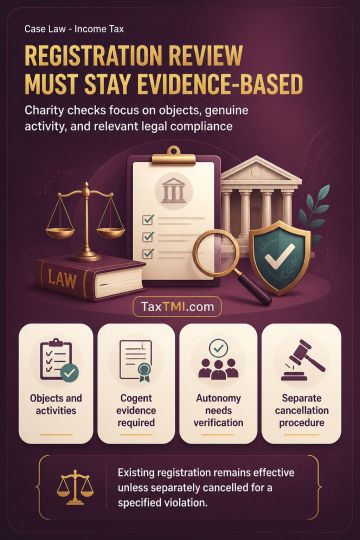
Public benefit requirement defeats charitable registration where residents' association services are reciprocal, member-only facilities governed by mu...
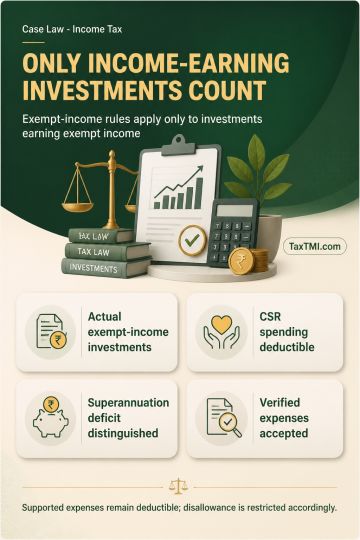
Exempt-income expenditure disallowance is confined to investments that actually generated exempt income, while supported business expenses remain dedu...
Objective characteristics and principal use govern mining-tyre classification, while fresh advance ruling applications may rely on additional technica...
HC ruled that the petitioner's refund claim for accumulated ITC was improperly rejected. Applying precedent from Patanjali case, the court held that filing a refund application after 18.07.2022 does not automatically disqualify an applicant from seeking refund within the statutory two-year limitation period. The notification creating an arbitrary classification among assessees based on filing date was deemed invalid. Consequently, the court quashed the rejection orders dated 24.02.2023 and 30.01.2023, thereby allowing the petitioner's refund claim and upholding the statutory right to file claims within the prescribed time limit.
HC ruled that the petitioner's refund claim for accumulated ITC was improperly rejected. Applying precedent from Patanjali case, the court held that filing a refund application after 18.07.2022 does not automatically disqualify an applicant from seeking refund within the statutory two-year limitation period. The notification creating an arbitrary classification among assessees based on filing date was deemed invalid. Consequently, the court quashed the rejection orders dated 24.02.2023 and 30.01.2023, thereby allowing the petitioner's refund claim and upholding the statutory right to file claims within the prescribed time limit.
Note: It is a system-generated summary and is for quick reference only.
 TaxTMI
 of 4803














 Join Channel


 TaxTMI
