Service of notice and contractual debt acknowledgment preserved insolvency admission against a corporate guarantor despite limitation and natural just...
Original works exemption excludes standalone boulder transportation, leaving subcontracted railway-project transport services subject to service tax l...
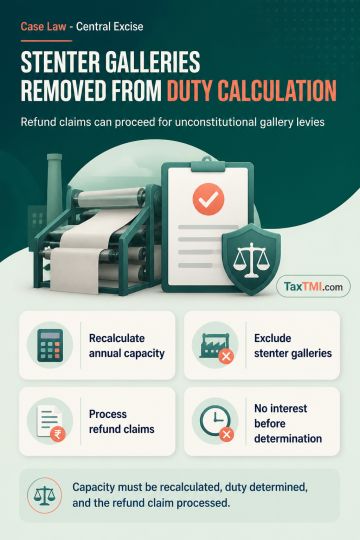
Annual production capacity determinations excluding stenter galleries support refunds for unconstitutional excise levies without an unjust-enrichment ...
Vicarious liability for cheque dishonour requires specific allegations of responsibility and cheque signatory; generic director allegations cannot sus...
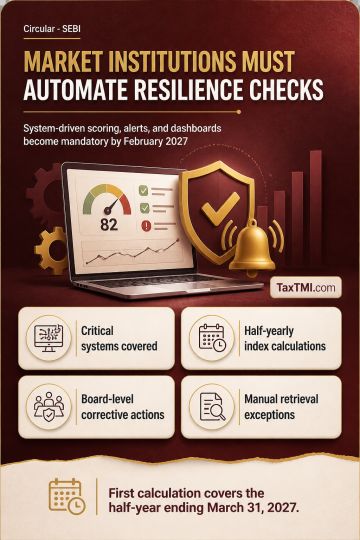
IT Resilience Index requires market infrastructure institutions to automate resilience scoring, early warnings, and continuous service-delivery monito...
HC held that the Appellate Commissioner possesses wide powers under Section 251 to review issues from the original Assessment Order, including those addressed in Section 154 rectification applications. The court clarified two key principles: (i) when no appeal is pending, the Income Tax Department can invoke Section 263 revision powers if a Section 154 order is erroneous, and (ii) during pending appeals, the Appellate Commissioner can enhance tax liability for assessment order subjects. Regarding unabsorbed depreciation, the court interpreted Section 32(2) to allow set-off against business profits or other assessable income for the relevant assessment year. The matter was remanded for reassessment, with directions to complete proceedings within six months and recompute Minimum Alternate Tax calculations accurately.
HC held that the Appellate Commissioner possesses wide powers under Section 251 to review issues from the original Assessment Order, including those addressed in Section 154 rectification applications. The court clarified two key principles: (i) when no appeal is pending, the Income Tax Department can invoke Section 263 revision powers if a Section 154 order is erroneous, and (ii) during pending appeals, the Appellate Commissioner can enhance tax liability for assessment order subjects. Regarding unabsorbed depreciation, the court interpreted Section 32(2) to allow set-off against business profits or other assessable income for the relevant assessment year. The matter was remanded for reassessment, with directions to complete proceedings within six months and recompute Minimum Alternate Tax calculations accurately.
Note: It is a system-generated summary and is for quick reference only.
 TaxTMI
  TaxTMI
 of 4828













 Join Channel