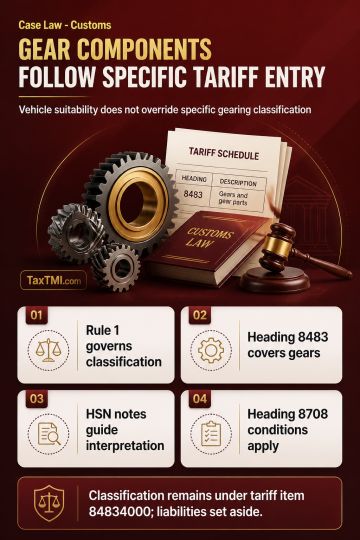
Tariff classification of vehicle gear components follows the specific gearing entry, displacing motor-vehicle parts classification and related liabili...
Necessary-party requirements limit impleadment of independent entities, while deferred consideration does not create an appealable adverse determinati...
Food supplement classification requires common parlance and authoritative tests, preventing treatment as proprietary Ayurvedic medicines without suppo...
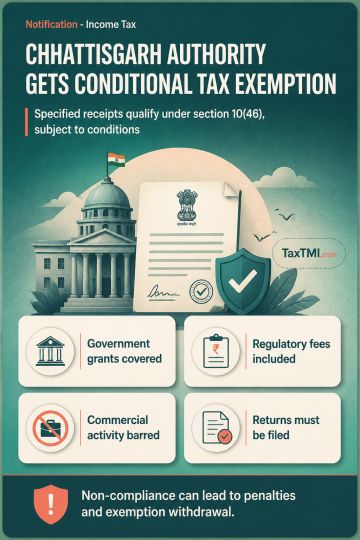
Specified regulatory authority income receives conditional tax exemption, subject to non-commercial activity, unchanged income character, and return f...
Tax exemption for regulatory authority income applies retrospectively, subject to non-commercial activity, unchanged income sources, and return-filing...
HC upheld the arbitral award, finding no grounds for interference under Section 34 of the Arbitration and Conciliation Act, 1996. The court determined that the arbitrator's reasoning was legally sound and based on available evidence. The award did not demonstrate patent illegality or violation of public policy. The court emphasized its limited review role, noting it cannot re-appreciate evidence or modify the arbitral award. Consequently, the petition challenging the arbitral award was dismissed, affirming the arbitrator's decision on contractual terms and GST liabilities.
HC upheld the arbitral award, finding no grounds for interference under Section 34 of the Arbitration and Conciliation Act, 1996. The court determined that the arbitrator's reasoning was legally sound and based on available evidence. The award did not demonstrate patent illegality or violation of public policy. The court emphasized its limited review role, noting it cannot re-appreciate evidence or modify the arbitral award. Consequently, the petition challenging the arbitral award was dismissed, affirming the arbitrator's decision on contractual terms and GST liabilities.
Note: It is a system-generated summary and is for quick reference only.
 TaxTMI
 of 4796
















 Join Channel


 TaxTMI
