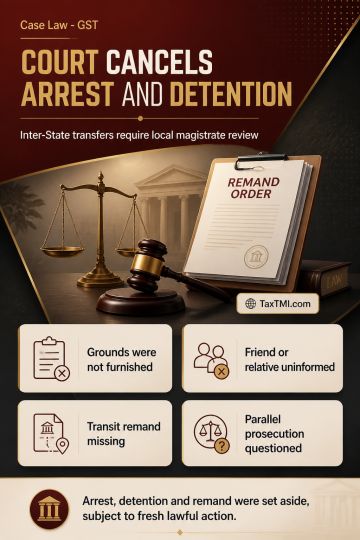
Arrest safeguards and transit remand requirements invalidated detention following inter-State transfer without communicated grounds or magistrate auth...
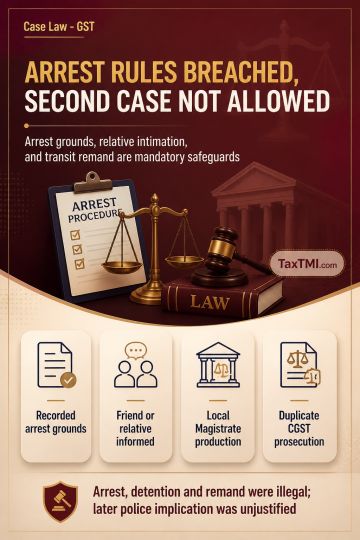
Arrest safeguards require disclosed grounds, relative intimation and transit remand, while duplicate prosecution under the CGST framework is unsustain...
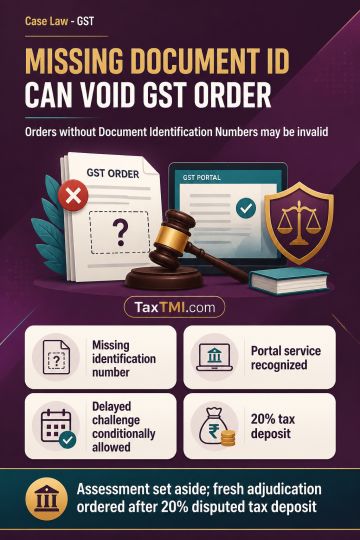
Document Identification Number defects can invalidate GST assessments, with delayed challenges entertained conditionally where patent irregularities e...
Windmill commissioning evidence supported higher depreciation where grid connection and electricity generation proved operational use before the relev...
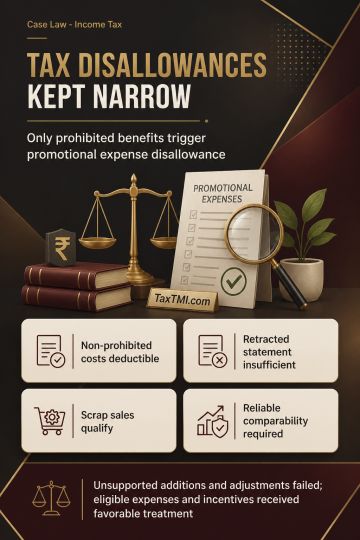
Pharmaceutical promotion and transfer-pricing comparability principles limited disallowances, while uncorroborated search allegations and unsupported ...
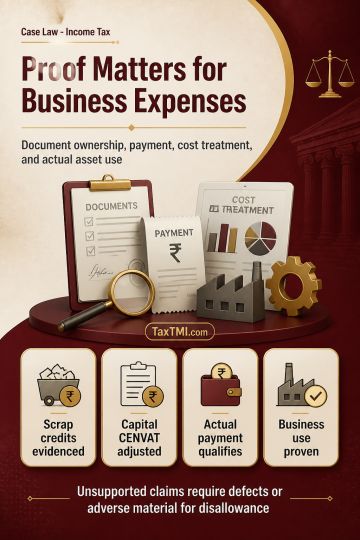
Business expenditure substantiation supports scrap credits, statutory payments and expense claims, while depreciation requires proof of actual busines...
Page of 4786
Press 'Enter' after typing page number.
461 to 480 of 95715 Results
❮
❯
❯❯
0 / 200
Expand Note
Add to Folder
No Folders have been created
+
Are you sure you want to delete "My most important" ?
CESTAT adjudicated a service tax dispute involving reimbursable expenses and business auxiliary services. The tribunal ruled in favor of the appellant, finding no valid basis for service tax levy on reimbursable expenses, consistent with SC precedent. The department's attempt to demand tax based on profit and loss account entries without demonstrating actual service consideration was rejected. Additionally, the tribunal found no evidence of intentional tax evasion, thereby invalidating extended limitation period and penalties. The appeal was allowed, effectively quashing the original tax demands and establishing that mere accounting entries cannot constitute taxable service under the Finance Act, 1994.
CESTAT adjudicated a service tax dispute involving reimbursable expenses and business auxiliary services. The tribunal ruled in favor of the appellant, finding no valid basis for service tax levy on reimbursable expenses, consistent with SC precedent. The department's attempt to demand tax based on profit and loss account entries without demonstrating actual service consideration was rejected. Additionally, the tribunal found no evidence of intentional tax evasion, thereby invalidating extended limitation period and penalties. The appeal was allowed, effectively quashing the original tax demands and establishing that mere accounting entries cannot constitute taxable service under the Finance Act, 1994.
Note: It is a system-generated summary and is for quick reference only.
 TaxTMI
 of 4786





 Join Channel


 TaxTMI