Vicarious liability for dishonoured company cheques may extend to non-signatory directors where complaints contain foundational responsibility avermen...
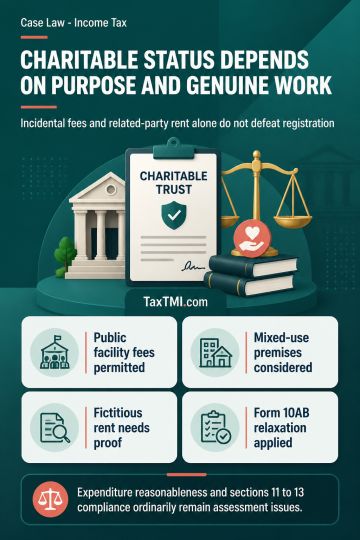
Charitable registration turns on predominant purpose and genuine activities, while incidental fees and related-party rent require supporting adverse m...
MAT book-profit adjustments exclude disallowances for exempt-income expenditure and demerger expenditure unless expressly listed under the statutory c...
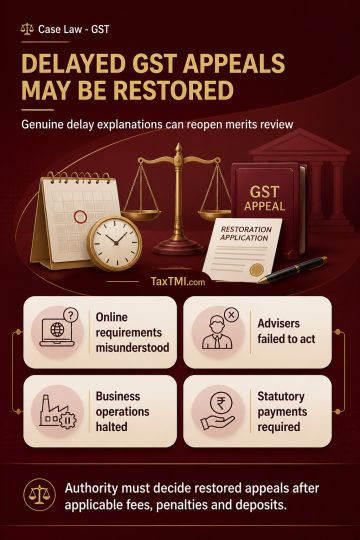
HC held that the petitioner firm, registered in two different states (U.P. and M.P.), requires further investigation to determine whether they constitute the same legal entity under GST law. The court found procedural irregularities in the ex-parte appeal, specifically the lack of proper notice service to the petitioner. Consequently, the HC set aside the previous orders, including the show cause notice and subsequent administrative actions, and restored the original appeal, granting the petitioner an opportunity to defend against the GST appeal. The petition was partially allowed, emphasizing the importance of due process and proper legal notification.
HC held that the petitioner firm, registered in two different states (U.P. and M.P.), requires further investigation to determine whether they constitute the same legal entity under GST law. The court found procedural irregularities in the ex-parte appeal, specifically the lack of proper notice service to the petitioner. Consequently, the HC set aside the previous orders, including the show cause notice and subsequent administrative actions, and restored the original appeal, granting the petitioner an opportunity to defend against the GST appeal. The petition was partially allowed, emphasizing the importance of due process and proper legal notification.
Note: It is a system-generated summary and is for quick reference only.
 TaxTMI
 of 4792





 Join Channel


 TaxTMI
