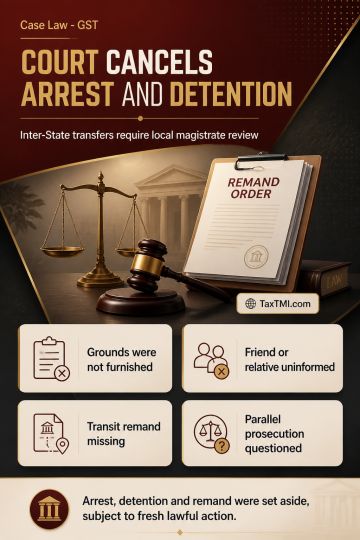
Arrest safeguards and transit remand requirements invalidated detention following inter-State transfer without communicated grounds or magistrate auth...
Arrest safeguards require disclosed grounds, relative intimation and transit remand, while duplicate prosecution under the CGST framework is unsustain...
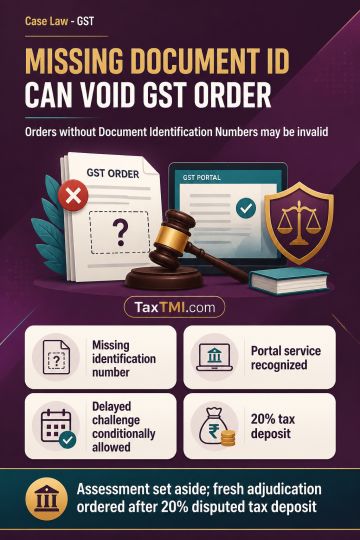
Document Identification Number defects can invalidate GST assessments, with delayed challenges entertained conditionally where patent irregularities e...
Windmill commissioning evidence supported higher depreciation where grid connection and electricity generation proved operational use before the relev...
Pharmaceutical promotion and transfer-pricing comparability principles limited disallowances, while uncorroborated search allegations and unsupported ...
Business expenditure substantiation supports scrap credits, statutory payments and expense claims, while depreciation requires proof of actual busines...
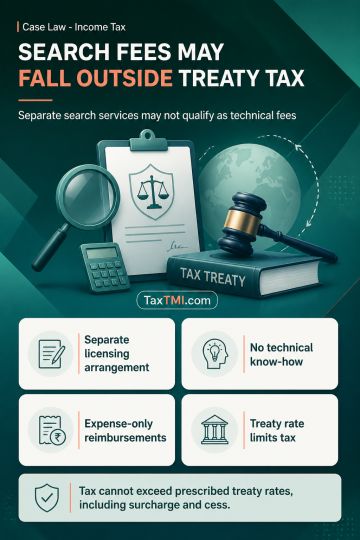
ITAT ruled in favor of the assessee, determining tax liability for services provided to Indian customers under India-USA DTAA. The tribunal held that income from domain name registration services is not taxable in India under section 9(1)(vi) or Article 12(3). Additionally, non-domain services like web hosting and web designing do not constitute technical knowledge transfer and thus fall outside the scope of Fees for Independent Services (FIS) under Article 12(4)(b). The assessee qualifies as a resident under Article 4 of the treaty and is entitled to avail DTAA benefits, with the fundamental power to tax distinguished from actual tax payment.
ITAT ruled in favor of the assessee, determining tax liability for services provided to Indian customers under India-USA DTAA. The tribunal held that income from domain name registration services is not taxable in India under section 9(1)(vi) or Article 12(3). Additionally, non-domain services like web hosting and web designing do not constitute technical knowledge transfer and thus fall outside the scope of Fees for Independent Services (FIS) under Article 12(4)(b). The assessee qualifies as a resident under Article 4 of the treaty and is entitled to avail DTAA benefits, with the fundamental power to tax distinguished from actual tax payment.
Note: It is a system-generated summary and is for quick reference only.
 TaxTMI
 of 4792
















 Join Channel


 TaxTMI