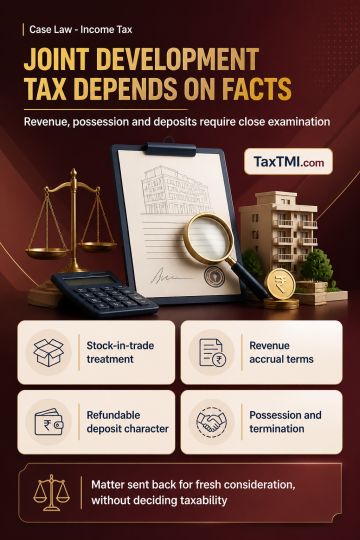
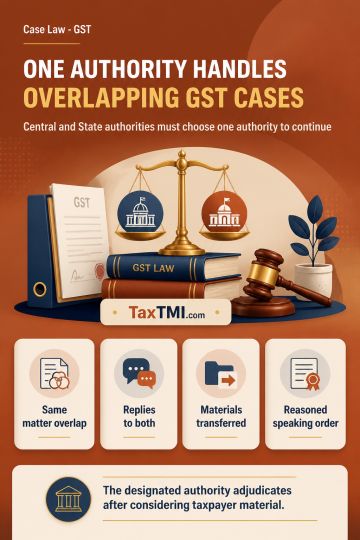
Overlapping GST proceedings require Central and State authorities to designate one competent authority for coordinated adjudication of the same matter...
Composite healthcare supplies retain exemption when patient care is the contract's essential character, despite payment through an implementing agency...
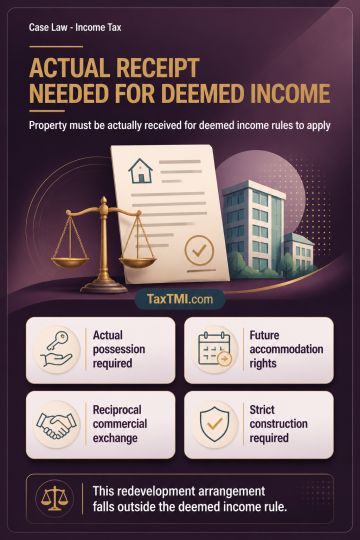
Receipt of immovable property requires actual possession or enjoyment; redevelopment allotments exchanged for tenancy rights fall outside deemed incom...
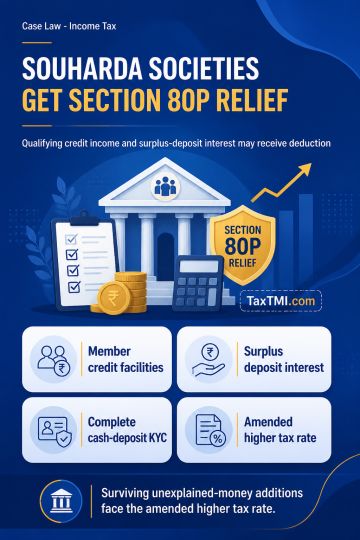
Section 80P deduction covers Souharda credit societies, including qualifying surplus-deposit interest, subject to member KYC verification for cash dep...
HC held that the notice u/s 148 was time-barred under Section 149(1), rendering it invalid. The Assessing Officer (AO) exceeded statutory limitations by issuing a notice beyond the prescribed time period. The court emphasized that procedural timelines are mandatory and cannot be circumvented. The impugned notice was liable to be set aside solely on the ground of limitation, irrespective of other substantive challenges. The decision underscores the critical importance of adhering to statutory time constraints in tax reassessment proceedings, affirming that procedural compliance is essential for maintaining the integrity of tax assessment processes.
HC held that the notice u/s 148 was time-barred under Section 149(1), rendering it invalid. The Assessing Officer (AO) exceeded statutory limitations by issuing a notice beyond the prescribed time period. The court emphasized that procedural timelines are mandatory and cannot be circumvented. The impugned notice was liable to be set aside solely on the ground of limitation, irrespective of other substantive challenges. The decision underscores the critical importance of adhering to statutory time constraints in tax reassessment proceedings, affirming that procedural compliance is essential for maintaining the integrity of tax assessment processes.
Note: It is a system-generated summary and is for quick reference only.
 TaxTMI
 of 4803







 Join Channel


 TaxTMI