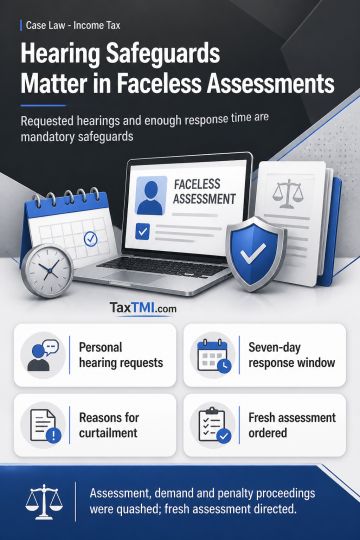
Faceless assessment safeguards require requested personal hearings and adequate final show-cause response time, failing which reassessment is required...
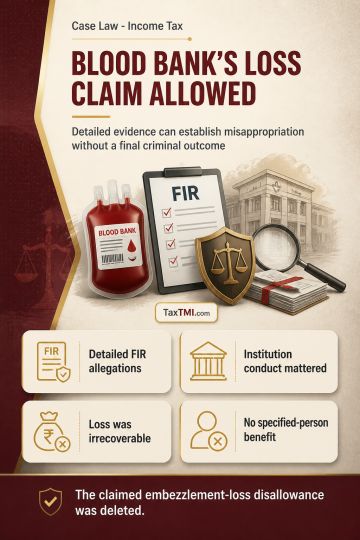
Embezzlement losses in charitable institutions remain allowable when misappropriation is established, irrecoverable, and not a specified-person benefi...
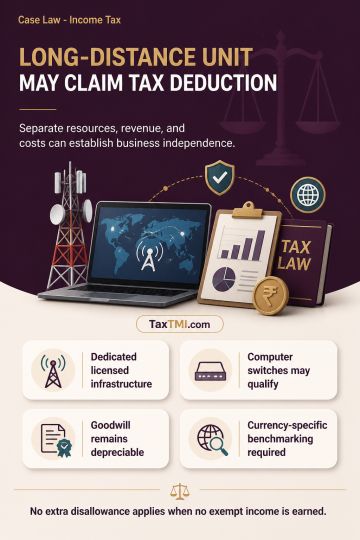
National long-distance undertaking status supports deduction where separately licensed infrastructure, resources, revenue, and expenditure establish c...
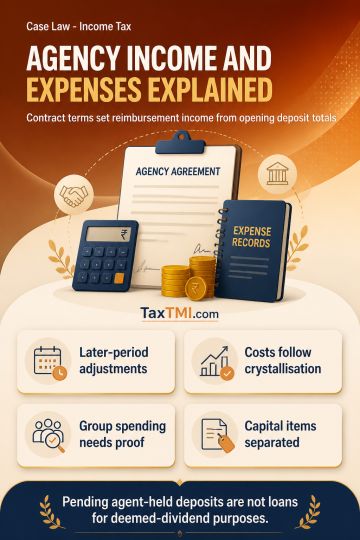
Agency reimbursement income follows contractual deposit-liability computation, while pending deposit collections do not constitute deemed-dividend loa...
ITAT partially allowed the appeal, reducing the estimated income addition from 10% to 1.52% of declared turnover. Despite concerns about unaudited accounts and non-filing of returns, the tribunal recognized the assessee's self-declared figures and permitted a set-off of Rs. 1,49,165/-. The decision mandates the assessee to reconcile financial discrepancies while moderating the income addition imposed by the Assessing Officer, thereby striking a balance between procedural compliance and equitable tax assessment.
ITAT partially allowed the appeal, reducing the estimated income addition from 10% to 1.52% of declared turnover. Despite concerns about unaudited accounts and non-filing of returns, the tribunal recognized the assessee's self-declared figures and permitted a set-off of Rs. 1,49,165/-. The decision mandates the assessee to reconcile financial discrepancies while moderating the income addition imposed by the Assessing Officer, thereby striking a balance between procedural compliance and equitable tax assessment.
Note: It is a system-generated summary and is for quick reference only.
 TaxTMI
  TaxTMI
 of 4884