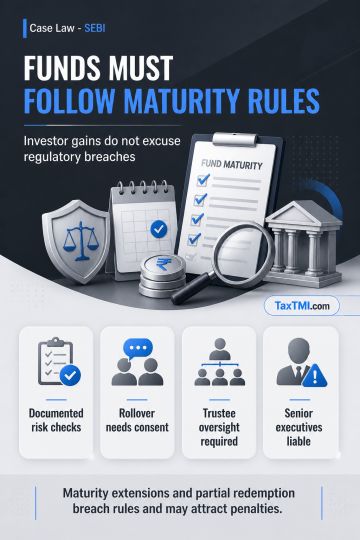
Mutual fund maturity rules require proper rollover, redemption, disclosure, and due diligence; investor gains cannot excuse regulatory breaches or pen...
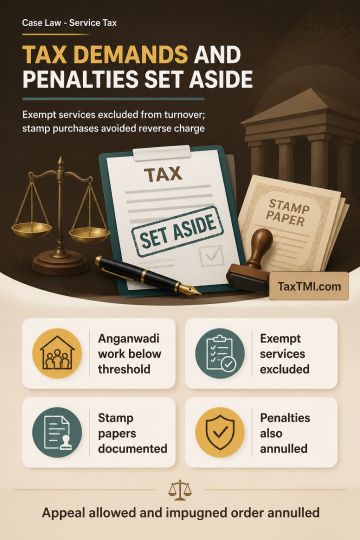
Threshold exemption excludes exempt services, while stamp-paper purchases avoid reverse charge; consequential service tax penalties were also set asid...
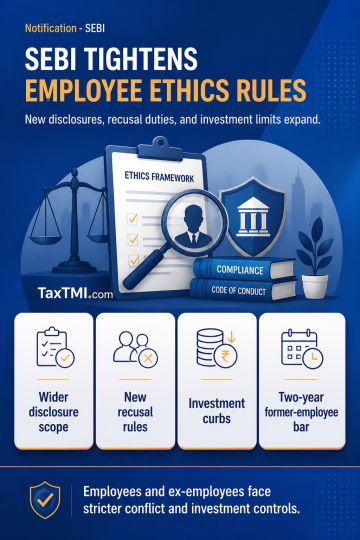
Employee conflict disclosures and investment restrictions expand with new recusal duties, post-employment limits, and compliance reporting requirement...
ITAT allowed the appeal, finding the lower authorities' approach legally incorrect. The Tribunal held that the assessee company's chosen Discounted Cash Flow (DCF) method for share valuation was valid under Rule 11UA(1)(c), and the Assessing Officer (AO) could not arbitrarily disregard this method. The Tribunal noted inconsistent treatment between resident and non-resident investors' share premium and rejected the addition under Section 56(2)(viib). Furthermore, the Tribunal ruled that the amendment to Section 115BBE should not be applied retroactively, as it was not intended to cover the assessee's case. The decision effectively deleted the additions made by the AO and confirmed by the CIT(A), providing relief to the assessee company.
ITAT allowed the appeal, finding the lower authorities' approach legally incorrect. The Tribunal held that the assessee company's chosen Discounted Cash Flow (DCF) method for share valuation was valid under Rule 11UA(1)(c), and the Assessing Officer (AO) could not arbitrarily disregard this method. The Tribunal noted inconsistent treatment between resident and non-resident investors' share premium and rejected the addition under Section 56(2)(viib). Furthermore, the Tribunal ruled that the amendment to Section 115BBE should not be applied retroactively, as it was not intended to cover the assessee's case. The decision effectively deleted the additions made by the AO and confirmed by the CIT(A), providing relief to the assessee company.
Note: It is a system-generated summary and is for quick reference only.
 TaxTMI
 of 4805








 Join Channel


 TaxTMI