Transaction value cannot be rejected solely on non-statutory valuation guidelines without corroborative evidence supporting reassessment of final cust...
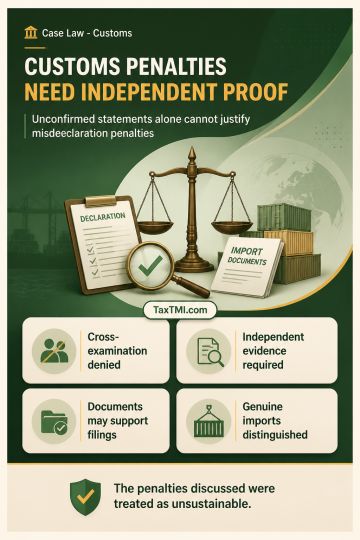
Cross-examination rights and corroborated evidence limit customs penalties for misdeclaration in genuine import transactions involving documented clea...
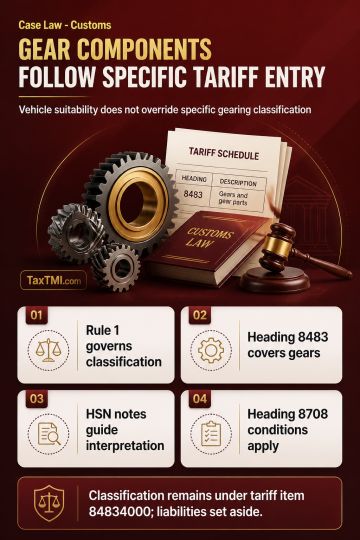
Tariff classification of vehicle gear components follows the specific gearing entry, displacing motor-vehicle parts classification and related liabili...
Necessary-party requirements limit impleadment of independent entities, while deferred consideration does not create an appealable adverse determinati...
Food supplement classification requires common parlance and authoritative tests, preventing treatment as proprietary Ayurvedic medicines without suppo...
ITAT allowed the appeal, finding the lower authorities' approach legally incorrect. The Tribunal held that the assessee company's chosen Discounted Cash Flow (DCF) method for share valuation was valid under Rule 11UA(1)(c), and the Assessing Officer (AO) could not arbitrarily disregard this method. The Tribunal noted inconsistent treatment between resident and non-resident investors' share premium and rejected the addition under Section 56(2)(viib). Furthermore, the Tribunal ruled that the amendment to Section 115BBE should not be applied retroactively, as it was not intended to cover the assessee's case. The decision effectively deleted the additions made by the AO and confirmed by the CIT(A), providing relief to the assessee company.
ITAT allowed the appeal, finding the lower authorities' approach legally incorrect. The Tribunal held that the assessee company's chosen Discounted Cash Flow (DCF) method for share valuation was valid under Rule 11UA(1)(c), and the Assessing Officer (AO) could not arbitrarily disregard this method. The Tribunal noted inconsistent treatment between resident and non-resident investors' share premium and rejected the addition under Section 56(2)(viib). Furthermore, the Tribunal ruled that the amendment to Section 115BBE should not be applied retroactively, as it was not intended to cover the assessee's case. The decision effectively deleted the additions made by the AO and confirmed by the CIT(A), providing relief to the assessee company.
Note: It is a system-generated summary and is for quick reference only.
 TaxTMI
 of 4801


















 Join Channel


 TaxTMI
