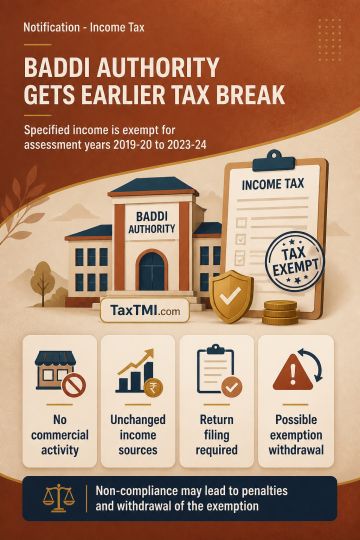
Specified development authority income receives retrospective tax exemption, subject to non-commercial activity, unchanged income sources, and return-...
Unified Brand India framework introduces voluntary Trust Mark certification and funding support for export branding, packaging and global promotional ...
Origin Declaration authentication governs preferential tariff claims under India-UK CETA, requiring a validated reference number before import clearan...
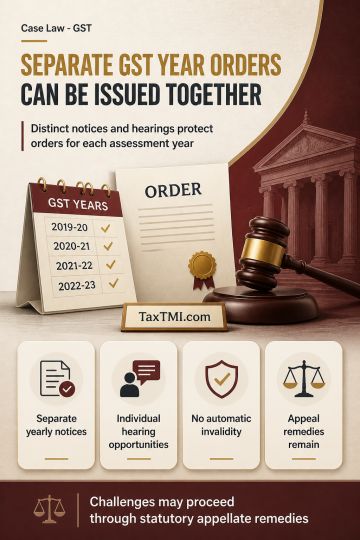
Separate assessment orders for different years remain valid when distinct notices and hearing opportunities prevent prejudice from combined proceeding...
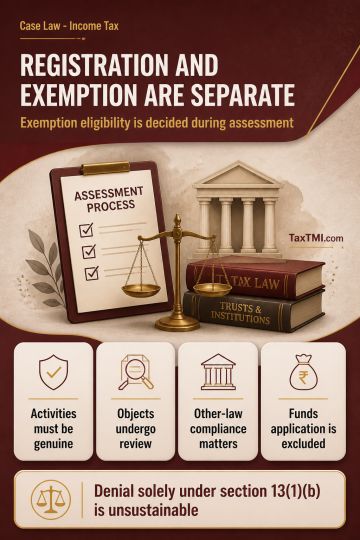
Defined public benefit can retain charitable character; registration renewal requires examining genuine activities and legal compliance, not surplus a...
Capital reduction is distinct from share buy-back, preventing buy-back tax; restructuring interest and related business deductions also survive scruti...
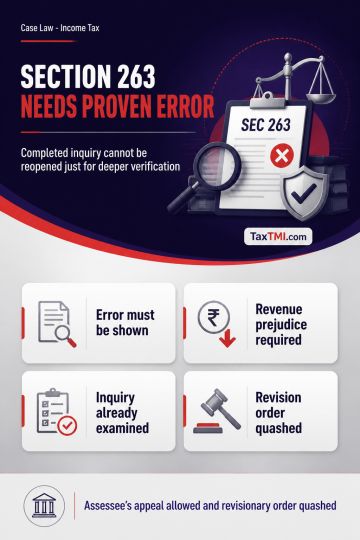
ITAT ruled in favor of the assessee, dismissing PCIT's revision petition under Section 263. The tribunal found that the assessing officer had conducted a comprehensive inquiry during original assessment proceedings, covering 25 detailed points including loan justifications. The key issues of unsecured interest-free loans and potential rental income were thoroughly examined. The tribunal emphasized that when the assessing officer adopts a legally permissible view, and two interpretations are possible, the order cannot be interfered with merely because another perspective exists. The court referenced precedents establishing that 263 proceedings are invalid when the initial assessment included proper enquiries and a plausible legal interpretation. Consequently, the PCIT's order was quashed and the assessee's appeal was allowed.
ITAT ruled in favor of the assessee, dismissing PCIT's revision petition under Section 263. The tribunal found that the assessing officer had conducted a comprehensive inquiry during original assessment proceedings, covering 25 detailed points including loan justifications. The key issues of unsecured interest-free loans and potential rental income were thoroughly examined. The tribunal emphasized that when the assessing officer adopts a legally permissible view, and two interpretations are possible, the order cannot be interfered with merely because another perspective exists. The court referenced precedents establishing that 263 proceedings are invalid when the initial assessment included proper enquiries and a plausible legal interpretation. Consequently, the PCIT's order was quashed and the assessee's appeal was allowed.
Note: It is a system-generated summary and is for quick reference only.
 TaxTMI
 of 4805













 Join Channel


 TaxTMI
