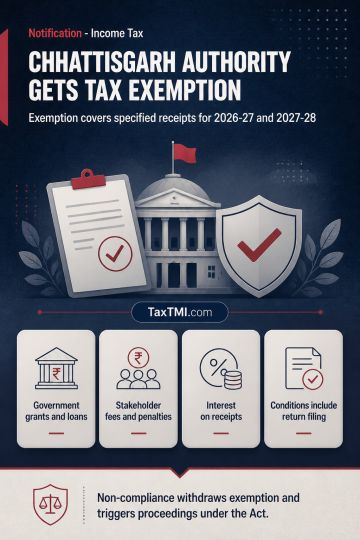
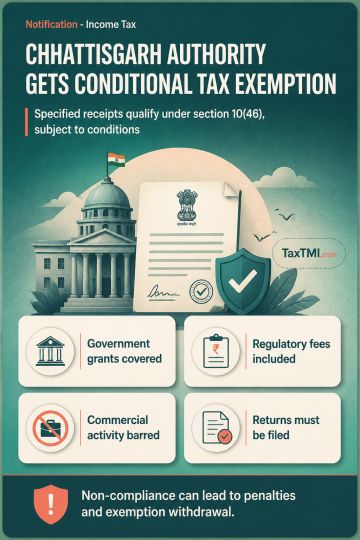
Specified regulatory authority income receives conditional tax exemption, subject to non-commercial activity, unchanged income character, and return f...
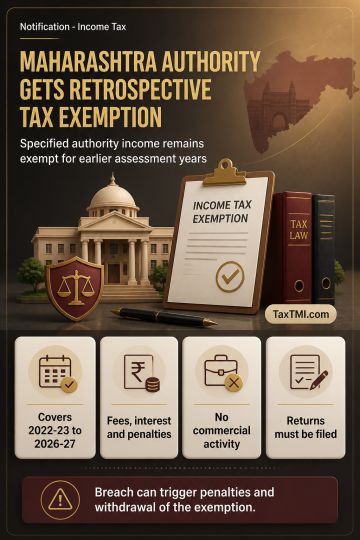
Tax exemption for regulatory authority income applies retrospectively, subject to non-commercial activity, unchanged income sources, and return-filing...
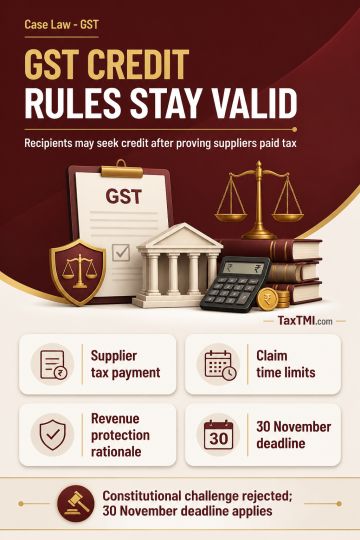
Input tax credit conditions remain constitutionally valid, with eligible recipient claims considered under GST circulars and retrospective filing dead...
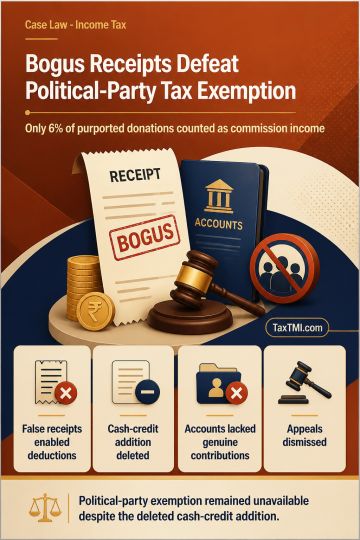
Bogus donation receipts justified commission income assessment and defeated political-party tax exemption for inaccurate accounts and reporting failur...
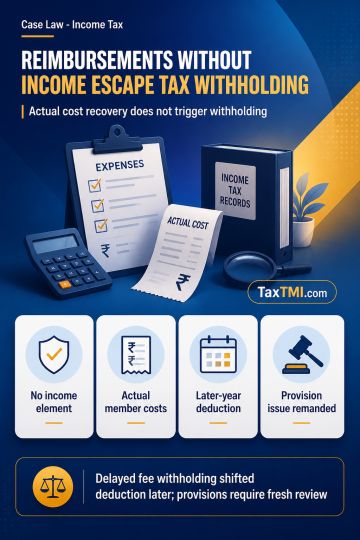
Pure reimbursement without income element escapes tax withholding, while delayed withholding and unsupported provisions face deferred or renewed scrut...
Public benefit requirement defeats charitable registration where residents' association services are reciprocal, member-only facilities governed by mu...
ITAT ruled in favor of the assessee, dismissing PCIT's revision petition under Section 263. The tribunal found that the assessing officer had conducted a comprehensive inquiry during original assessment proceedings, covering 25 detailed points including loan justifications. The key issues of unsecured interest-free loans and potential rental income were thoroughly examined. The tribunal emphasized that when the assessing officer adopts a legally permissible view, and two interpretations are possible, the order cannot be interfered with merely because another perspective exists. The court referenced precedents establishing that 263 proceedings are invalid when the initial assessment included proper enquiries and a plausible legal interpretation. Consequently, the PCIT's order was quashed and the assessee's appeal was allowed.
ITAT ruled in favor of the assessee, dismissing PCIT's revision petition under Section 263. The tribunal found that the assessing officer had conducted a comprehensive inquiry during original assessment proceedings, covering 25 detailed points including loan justifications. The key issues of unsecured interest-free loans and potential rental income were thoroughly examined. The tribunal emphasized that when the assessing officer adopts a legally permissible view, and two interpretations are possible, the order cannot be interfered with merely because another perspective exists. The court referenced precedents establishing that 263 proceedings are invalid when the initial assessment included proper enquiries and a plausible legal interpretation. Consequently, the PCIT's order was quashed and the assessee's appeal was allowed.
Note: It is a system-generated summary and is for quick reference only.
 TaxTMI
 of 4801







 Join Channel


 TaxTMI
