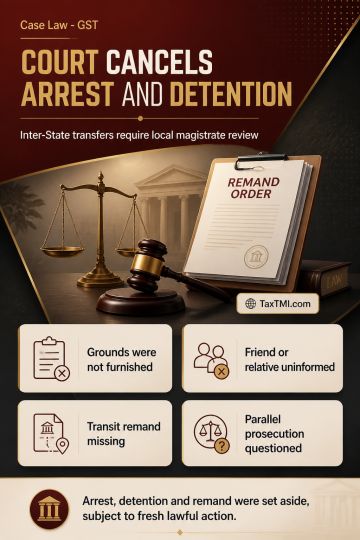
Arrest safeguards and transit remand requirements invalidated detention following inter-State transfer without communicated grounds or magistrate auth...
Arrest safeguards require disclosed grounds, relative intimation and transit remand, while duplicate prosecution under the CGST framework is unsustain...
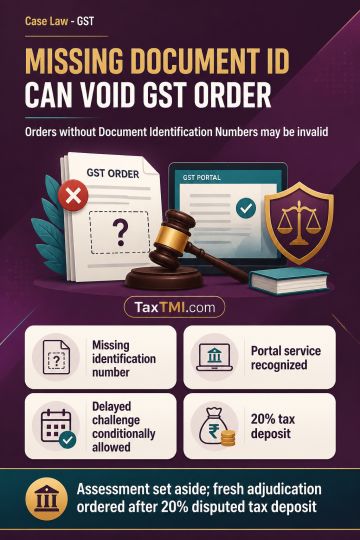
Document Identification Number defects can invalidate GST assessments, with delayed challenges entertained conditionally where patent irregularities e...
Windmill commissioning evidence supported higher depreciation where grid connection and electricity generation proved operational use before the relev...
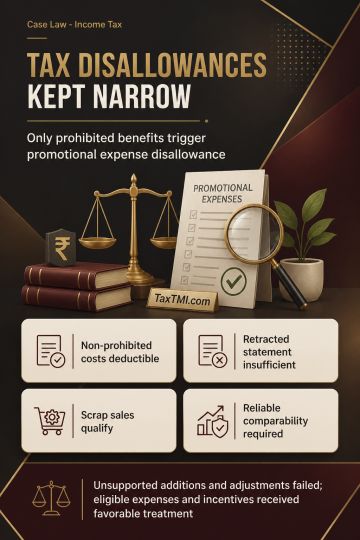
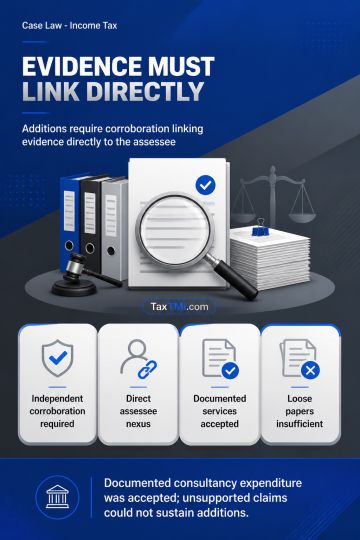
Pharmaceutical promotion and transfer-pricing comparability principles limited disallowances, while uncorroborated search allegations and unsupported ...
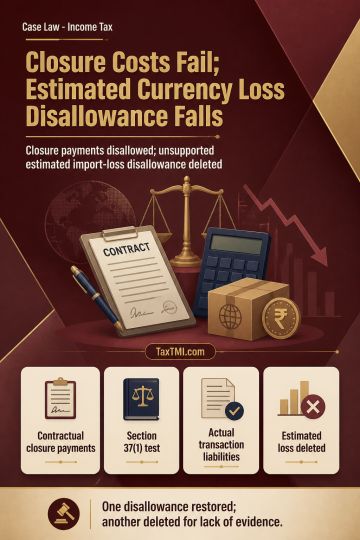
Business expenditure substantiation supports scrap credits, statutory payments and expense claims, while depreciation requires proof of actual busines...
Page of 4794
Press 'Enter' after typing page number.
621 to 640 of 95875 Results
❮
❯
❯❯
0 / 200
Expand Note
Add to Folder
No Folders have been created
+
Are you sure you want to delete "My most important" ?
ITAT rejected Revenue's application for rectification under Section 254(2). The Tribunal determined that the application was essentially a disguised attempt to review the original order, which is impermissible. The Tribunal emphasized that its power under Section 254(2) is limited to correcting apparent mistakes on the record, not re-examining the merits of the case. Relying on precedent, the Tribunal held that revisiting the original order's substantive findings falls outside the scope of Section 254(2). Consequently, the Miscellaneous Application was dismissed, with the Tribunal maintaining its original order and finding no mistake apparent on the record warranting rectification.
ITAT rejected Revenue's application for rectification under Section 254(2). The Tribunal determined that the application was essentially a disguised attempt to review the original order, which is impermissible. The Tribunal emphasized that its power under Section 254(2) is limited to correcting apparent mistakes on the record, not re-examining the merits of the case. Relying on precedent, the Tribunal held that revisiting the original order's substantive findings falls outside the scope of Section 254(2). Consequently, the Miscellaneous Application was dismissed, with the Tribunal maintaining its original order and finding no mistake apparent on the record warranting rectification.
Note: It is a system-generated summary and is for quick reference only.
 TaxTMI
 of 4794














 Join Channel


 TaxTMI