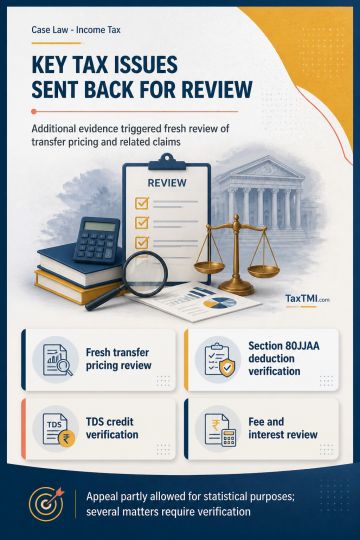
Additional evidence in transfer pricing dispute leads to fresh examination, while tax deductions, TDS credit, fee and refund interest require verifica...
Category II AIF pass-through taxation preserves non-business income character; investment receipts cannot be reclassified without applying recognised ...
Mutual fund maturity rules require proper rollover, redemption, disclosure, and due diligence; investor gains cannot excuse regulatory breaches or pen...
Threshold exemption excludes exempt services, while stamp-paper purchases avoid reverse charge; consequential service tax penalties were also set asid...
Employee conflict disclosures and investment restrictions expand with new recusal duties, post-employment limits, and compliance reporting requirement...
ITAT set aside Pr.CIT's order under section 263, finding procedural irregularities in reassessment proceedings. The tribunal determined that Pr.CIT exceeded jurisdictional limits by: (1) considering documents not available during original examination, (2) introducing issues beyond the original reassessment scope under section 147, and (3) improperly evaluating additional tax-related matters not part of initial proceedings. The tribunal emphasized that revisional powers must be exercised strictly based on records existing at the time of original assessment. Consequently, the entire proceedings were deemed ultra vires, with the appellate order partially allowing the assessee's appeal and nullifying the CIT's interventions.
ITAT set aside Pr.CIT's order under section 263, finding procedural irregularities in reassessment proceedings. The tribunal determined that Pr.CIT exceeded jurisdictional limits by: (1) considering documents not available during original examination, (2) introducing issues beyond the original reassessment scope under section 147, and (3) improperly evaluating additional tax-related matters not part of initial proceedings. The tribunal emphasized that revisional powers must be exercised strictly based on records existing at the time of original assessment. Consequently, the entire proceedings were deemed ultra vires, with the appellate order partially allowing the assessee's appeal and nullifying the CIT's interventions.
Note: It is a system-generated summary and is for quick reference only.
 TaxTMI
 of 4803

















 Join Channel


 TaxTMI
