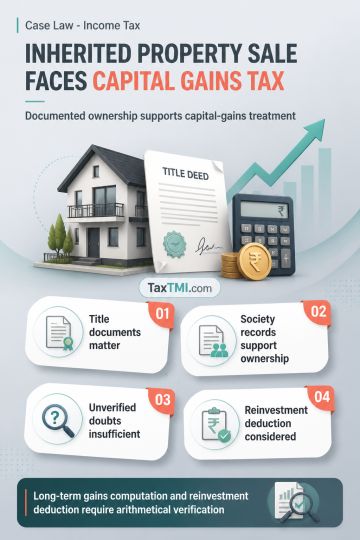
Inherited property sale proceeds require capital-gains treatment where ownership is supported by evidence, not suspicion or unverified signature doubt...
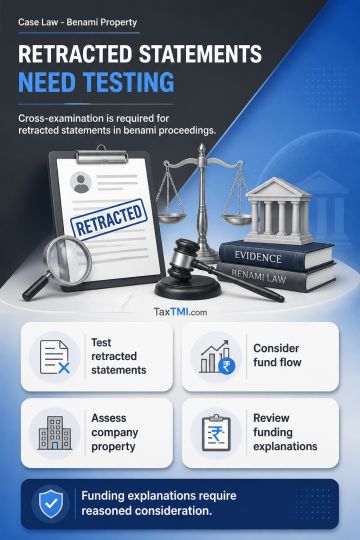
Cross-examination of retracted statements is essential where foundational evidence supports a benami allegation and documented funding explanations re...
Capital-goods exemption covers plant-modernisation accessories, while the import restriction applies only to earlier capital-goods components and spar...
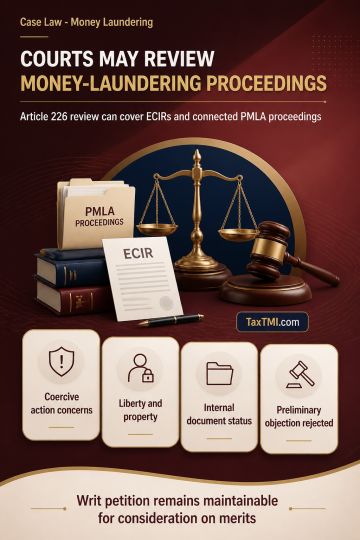
Constitutional judicial review permits challenges to ECIRs and connected money-laundering proceedings where coercive action affects fundamental intere...
ITAT allowed the taxpayer's claim for deduction of expenditure incurred in an abandoned project, recognizing that the project abandonment was due to reasons beyond the assessee's control. The tribunal held that the written-off expenses under 'work in progress' were commercially justified and not subject to tax authority scrutiny. The tribunal directed the Assessing Officer to delete the disallowance in both the section 143(1) intimation and section 143(3) assessment order, effectively permitting the expenditure deduction based on the commercial reasonableness of the assessee's decision.
ITAT allowed the taxpayer's claim for deduction of expenditure incurred in an abandoned project, recognizing that the project abandonment was due to reasons beyond the assessee's control. The tribunal held that the written-off expenses under 'work in progress' were commercially justified and not subject to tax authority scrutiny. The tribunal directed the Assessing Officer to delete the disallowance in both the section 143(1) intimation and section 143(3) assessment order, effectively permitting the expenditure deduction based on the commercial reasonableness of the assessee's decision.
Note: It is a system-generated summary and is for quick reference only.
 TaxTMI
 of 4784
















 Join Channel


 TaxTMI