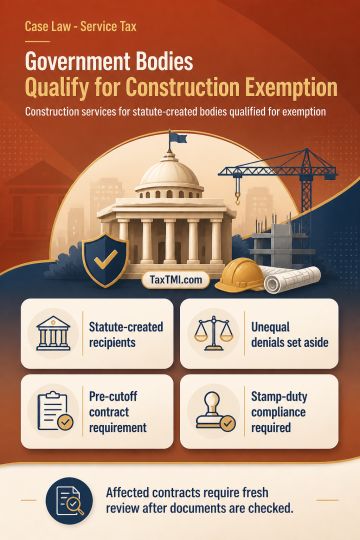
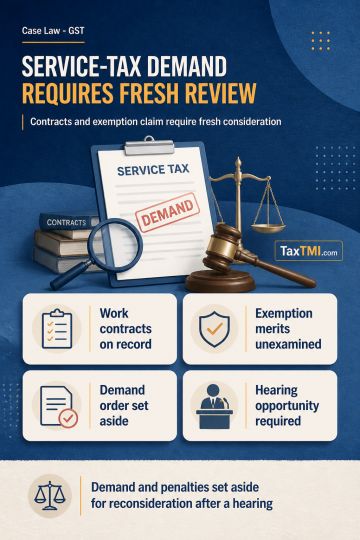
Governmental authority status supports construction-service exemption, while pre-cutoff contract and stamp-duty compliance requires verification on re...
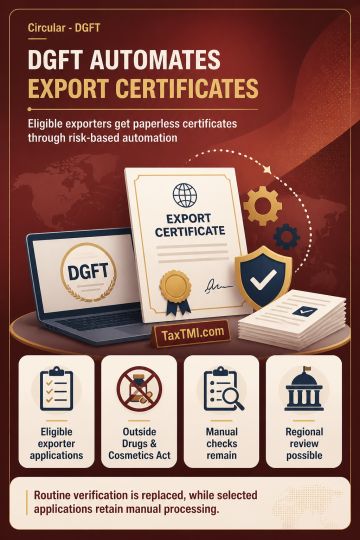
Automated Free Sale and Commerce Certificates enable paperless processing while retaining risk-based manual verification for selected exporter applica...
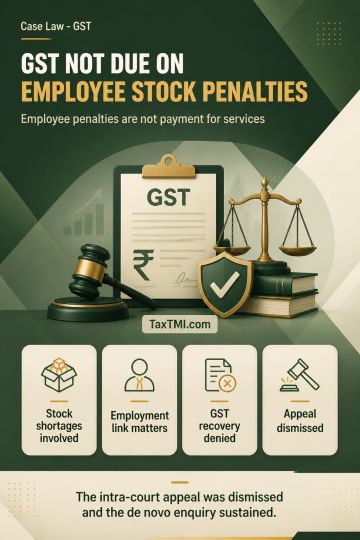
Employee stock-shortage penalties do not constitute consideration for services, preventing GST collection under Schedule II in employment relationship...
HC determined that cognizance of offences under Section 174-A IPC requires a mandatory written complaint by the concerned public servant, as per Section 195(1)(a)(i) Cr.P.C. The court held that judicial interpretation cannot assume legislative intent or fill legislative gaps. Following precedential reasoning from prior Supreme Court judgments, the court affirmed that taking cognizance without a written complaint would be procedurally invalid. The petition challenging charges was consequently allowed, setting aside the previous order and reaffirming the strict procedural requirement of a written complaint for initiating proceedings under Section 174-A IPC.
HC determined that cognizance of offences under Section 174-A IPC requires a mandatory written complaint by the concerned public servant, as per Section 195(1)(a)(i) Cr.P.C. The court held that judicial interpretation cannot assume legislative intent or fill legislative gaps. Following precedential reasoning from prior Supreme Court judgments, the court affirmed that taking cognizance without a written complaint would be procedurally invalid. The petition challenging charges was consequently allowed, setting aside the previous order and reaffirming the strict procedural requirement of a written complaint for initiating proceedings under Section 174-A IPC.
Note: It is a system-generated summary and is for quick reference only.
 TaxTMI
  TaxTMI
 of 4828



 Join Channel


