Retention of seized property survives where recorded reasons support proceeds of crime, while stayed investigation periods are excluded from limitatio...
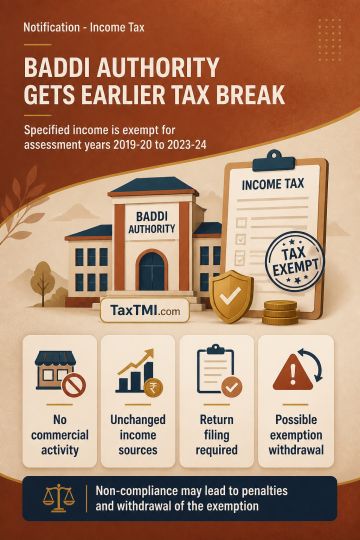
Specified income of Baddi Barotiwala Nalagarh Development Authority receives conditional tax exemption, retrospectively covering its designated assess...
Specified development authority income receives retrospective tax exemption, subject to non-commercial activity, unchanged income sources, and return-...
Unified Brand India framework introduces voluntary Trust Mark certification and funding support for export branding, packaging and global promotional ...
Origin Declaration authentication governs preferential tariff claims under India-UK CETA, requiring a validated reference number before import clearan...
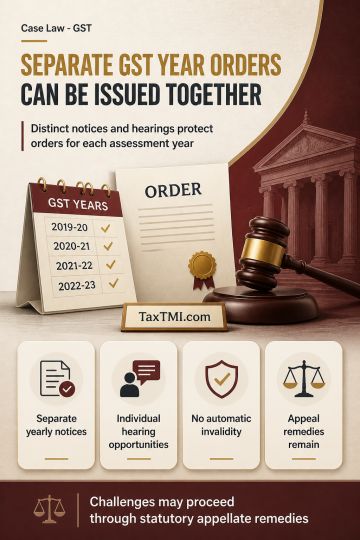
Separate assessment orders for different years remain valid when distinct notices and hearing opportunities prevent prejudice from combined proceeding...
The Trade Circular addresses key interpretative issues regarding Section 128A of the WBGST Act, 2017, clarifying two primary concerns: (1) taxpayers who paid taxes through FORM GSTR-3B prior to 1st November 2024 remain eligible for benefits under Section 128A, subject to proper officer verification; and (2) for notices/orders spanning periods partially within and outside Section 128A's scope, taxpayers may file FORM SPL-01/SPL-02 after paying tax liability for covered periods, with appellate authorities empowered to adjudicate remaining periods independently, thereby providing a flexible mechanism for resolving complex tax dispute scenarios while maintaining procedural compliance.
The Trade Circular addresses key interpretative issues regarding Section 128A of the WBGST Act, 2017, clarifying two primary concerns: (1) taxpayers who paid taxes through FORM GSTR-3B prior to 1st November 2024 remain eligible for benefits under Section 128A, subject to proper officer verification; and (2) for notices/orders spanning periods partially within and outside Section 128A's scope, taxpayers may file FORM SPL-01/SPL-02 after paying tax liability for covered periods, with appellate authorities empowered to adjudicate remaining periods independently, thereby providing a flexible mechanism for resolving complex tax dispute scenarios while maintaining procedural compliance.
Note: It is a system-generated summary and is for quick reference only.
 TaxTMI
 of 4801














 Join Channel


 TaxTMI