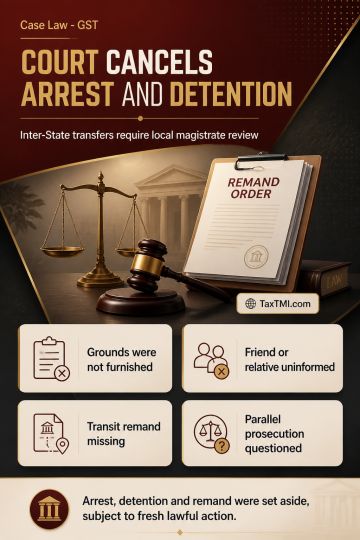
Arrest safeguards and transit remand requirements invalidated detention following inter-State transfer without communicated grounds or magistrate auth...
Arrest safeguards require disclosed grounds, relative intimation and transit remand, while duplicate prosecution under the CGST framework is unsustain...
Document Identification Number defects can invalidate GST assessments, with delayed challenges entertained conditionally where patent irregularities e...
Windmill commissioning evidence supported higher depreciation where grid connection and electricity generation proved operational use before the relev...
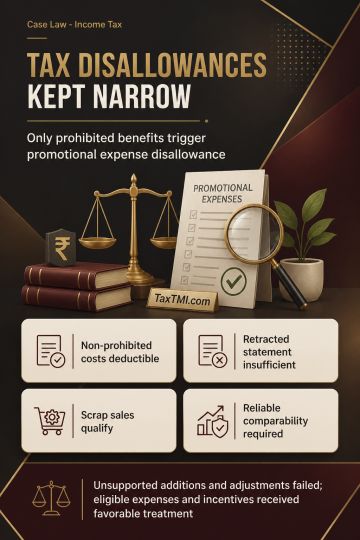
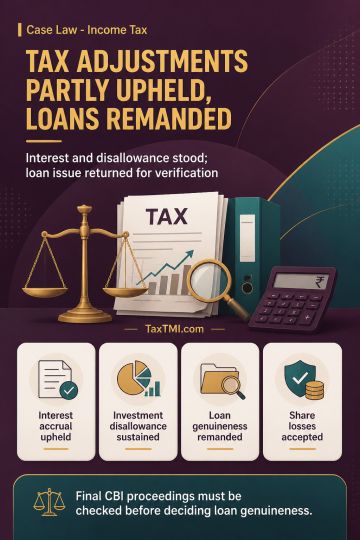
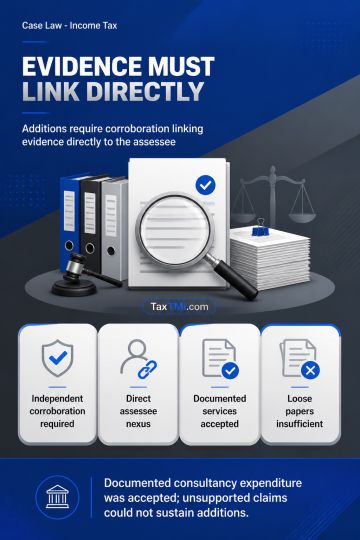
Pharmaceutical promotion and transfer-pricing comparability principles limited disallowances, while uncorroborated search allegations and unsupported ...
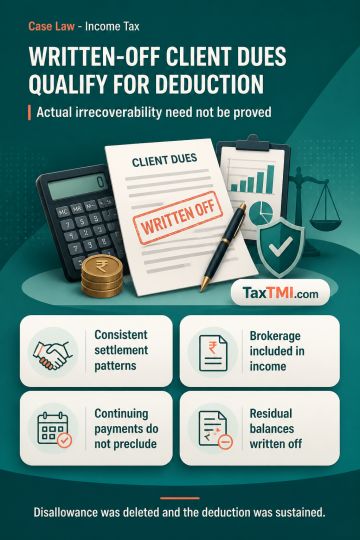
Business expenditure substantiation supports scrap credits, statutory payments and expense claims, while depreciation requires proof of actual busines...
The Trade Circular addresses key interpretative issues regarding Section 128A of the WBGST Act, 2017, clarifying two primary concerns: (1) taxpayers who paid taxes through FORM GSTR-3B prior to 1st November 2024 remain eligible for benefits under Section 128A, subject to proper officer verification; and (2) for notices/orders spanning periods partially within and outside Section 128A's scope, taxpayers may file FORM SPL-01/SPL-02 after paying tax liability for covered periods, with appellate authorities empowered to adjudicate remaining periods independently, thereby providing a flexible mechanism for resolving complex tax dispute scenarios while maintaining procedural compliance.
The Trade Circular addresses key interpretative issues regarding Section 128A of the WBGST Act, 2017, clarifying two primary concerns: (1) taxpayers who paid taxes through FORM GSTR-3B prior to 1st November 2024 remain eligible for benefits under Section 128A, subject to proper officer verification; and (2) for notices/orders spanning periods partially within and outside Section 128A's scope, taxpayers may file FORM SPL-01/SPL-02 after paying tax liability for covered periods, with appellate authorities empowered to adjudicate remaining periods independently, thereby providing a flexible mechanism for resolving complex tax dispute scenarios while maintaining procedural compliance.
Note: It is a system-generated summary and is for quick reference only.
 TaxTMI
 of 4792












 Join Channel


 TaxTMI