Transaction value cannot be rejected solely on non-statutory valuation guidelines without corroborative evidence supporting reassessment of final cust...
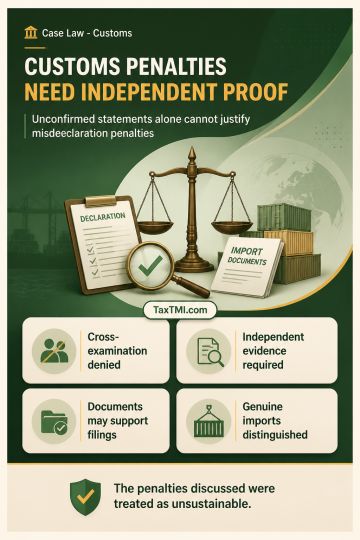
Cross-examination rights and corroborated evidence limit customs penalties for misdeclaration in genuine import transactions involving documented clea...
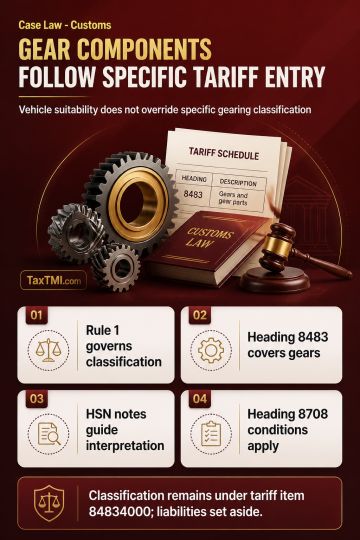
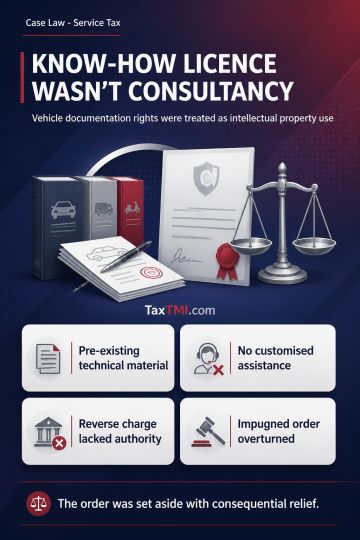
Tariff classification of vehicle gear components follows the specific gearing entry, displacing motor-vehicle parts classification and related liabili...
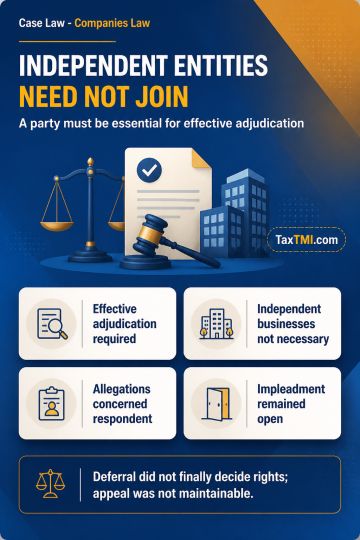
Necessary-party requirements limit impleadment of independent entities, while deferred consideration does not create an appealable adverse determinati...
Food supplement classification requires common parlance and authoritative tests, preventing treatment as proprietary Ayurvedic medicines without suppo...
HC held that GST registration license cancellation was improper due to procedural irregularities. The visit note by the CGST Superintendent lacked corroborative evidence, as no additional witnesses were present during the physical verification. The officer failed to record statements from nearby shop owners and obtain their signatures, rendering the verification process fundamentally flawed. The subsequent administrative orders at different levels were found unsustainable, primarily because the initial verification was conducted without proper protocol. The court emphasized the importance of following Rule 25 of GST Rules 2017, which mandates comprehensive documentation and witness verification during business premise inspections. Consequently, the petitioner's license cancellation was quashed, and the administrative orders were set aside.
HC held that GST registration license cancellation was improper due to procedural irregularities. The visit note by the CGST Superintendent lacked corroborative evidence, as no additional witnesses were present during the physical verification. The officer failed to record statements from nearby shop owners and obtain their signatures, rendering the verification process fundamentally flawed. The subsequent administrative orders at different levels were found unsustainable, primarily because the initial verification was conducted without proper protocol. The court emphasized the importance of following Rule 25 of GST Rules 2017, which mandates comprehensive documentation and witness verification during business premise inspections. Consequently, the petitioner's license cancellation was quashed, and the administrative orders were set aside.
Note: It is a system-generated summary and is for quick reference only.
 TaxTMI
 of 4805










 Join Channel


 TaxTMI
