Prolonged sterilisation of development rights supports capital-gains treatment, while business-income disallowances cannot govern capital-gains comput...
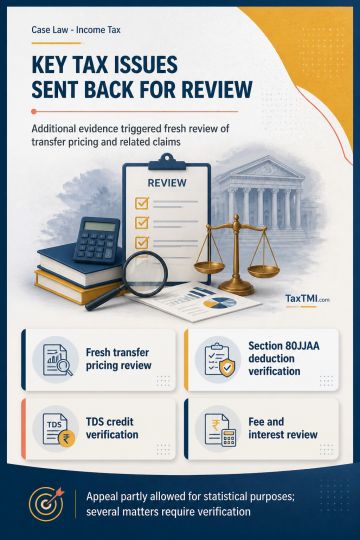
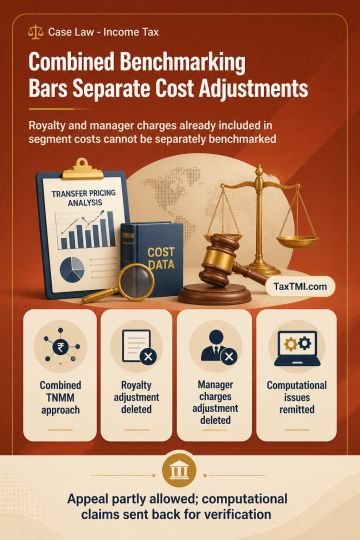
Additional evidence in transfer pricing dispute leads to fresh examination, while tax deductions, TDS credit, fee and refund interest require verifica...
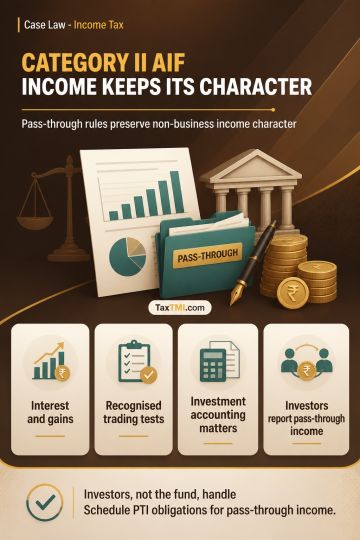
Category II AIF pass-through taxation preserves non-business income character; investment receipts cannot be reclassified without applying recognised ...
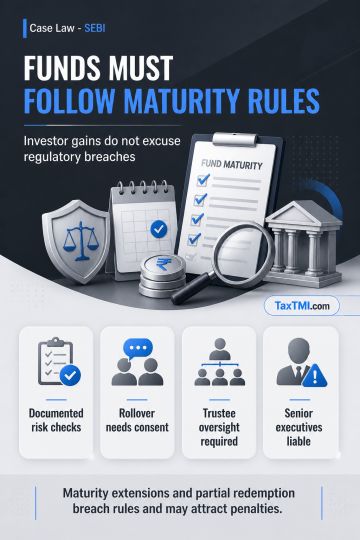
Mutual fund maturity rules require proper rollover, redemption, disclosure, and due diligence; investor gains cannot excuse regulatory breaches or pen...
Threshold exemption excludes exempt services, while stamp-paper purchases avoid reverse charge; consequential service tax penalties were also set asid...
The ITAT examined multiple aspects of a tax penalty case involving undisclosed income. The tribunal found no justification for penalty u/s 271(1)(c) across various income categories including house property, buffer income, and salary. Key determinations included: (1) the complexity of tax law precluded deliberate concealment, (2) residential status dispute undermined penalty proceedings, and (3) penalty orders were time-barred under section 275(1)(c). Critically, the immunity period granted by the Settlement Commission and subsequent legal challenges rendered the penalty unsustainable. The tribunal ultimately upheld the CIT(A)'s order quashing the penalty, dismissing revenue's grounds and finding the penalty proceedings statutorily invalid due to limitation constraints.
The ITAT examined multiple aspects of a tax penalty case involving undisclosed income. The tribunal found no justification for penalty u/s 271(1)(c) across various income categories including house property, buffer income, and salary. Key determinations included: (1) the complexity of tax law precluded deliberate concealment, (2) residential status dispute undermined penalty proceedings, and (3) penalty orders were time-barred under section 275(1)(c). Critically, the immunity period granted by the Settlement Commission and subsequent legal challenges rendered the penalty unsustainable. The tribunal ultimately upheld the CIT(A)'s order quashing the penalty, dismissing revenue's grounds and finding the penalty proceedings statutorily invalid due to limitation constraints.
Note: It is a system-generated summary and is for quick reference only.
 TaxTMI
 of 4805












 Join Channel


 TaxTMI
