Transfer pricing and tax deductions upheld on established principles, while employee contributions and warranty provisions returned for fresh examinat...
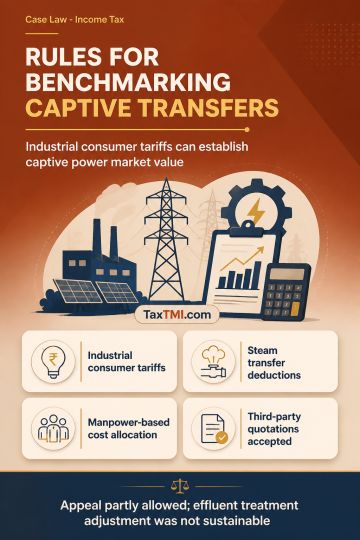
Captive transfer pricing relies on industrial consumer tariffs, while genuine quotations can benchmark effluent treatment transfers under the Other Me...
Specific tariff classification for ophthalmic instruments and extended limitation principles determine the treatment of duty demands, confiscation, an...
Integrated golf function determines classification, placing launch monitors and simulators under other golf equipment rather than measuring instrument...
Public servant status under anti-corruption law extends to recognised stock exchange leadership; constitutional and sanction challenges do not succeed...
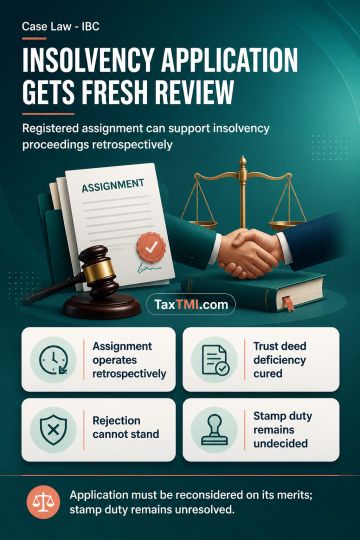
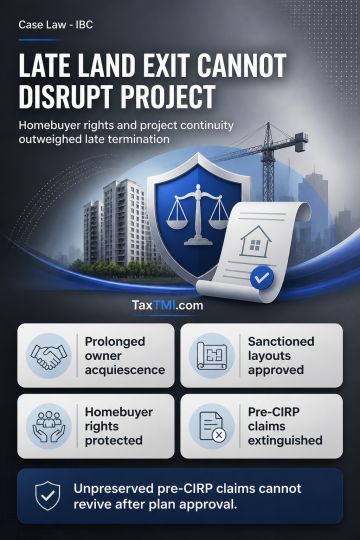
Acquiescence, homebuyer protection and clean-slate resolution principles prevent landowners from disrupting an integrated project through late termina...
The ITAT examined multiple aspects of a tax penalty case involving undisclosed income. The tribunal found no justification for penalty u/s 271(1)(c) across various income categories including house property, buffer income, and salary. Key determinations included: (1) the complexity of tax law precluded deliberate concealment, (2) residential status dispute undermined penalty proceedings, and (3) penalty orders were time-barred under section 275(1)(c). Critically, the immunity period granted by the Settlement Commission and subsequent legal challenges rendered the penalty unsustainable. The tribunal ultimately upheld the CIT(A)'s order quashing the penalty, dismissing revenue's grounds and finding the penalty proceedings statutorily invalid due to limitation constraints.
The ITAT examined multiple aspects of a tax penalty case involving undisclosed income. The tribunal found no justification for penalty u/s 271(1)(c) across various income categories including house property, buffer income, and salary. Key determinations included: (1) the complexity of tax law precluded deliberate concealment, (2) residential status dispute undermined penalty proceedings, and (3) penalty orders were time-barred under section 275(1)(c). Critically, the immunity period granted by the Settlement Commission and subsequent legal challenges rendered the penalty unsustainable. The tribunal ultimately upheld the CIT(A)'s order quashing the penalty, dismissing revenue's grounds and finding the penalty proceedings statutorily invalid due to limitation constraints.
Note: It is a system-generated summary and is for quick reference only.
 TaxTMI
 of 4805
















 Join Channel


 TaxTMI