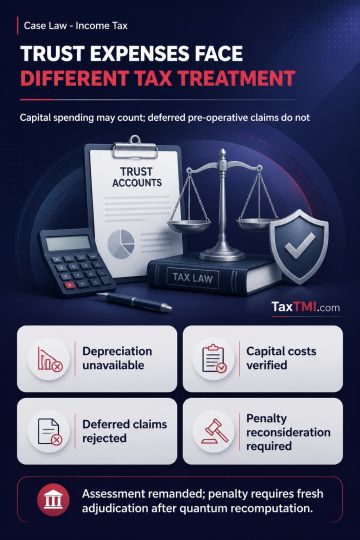
Charitable trust income application permits verified capital expenditure but rejects deferred pre-operative claims and requires reconsideration of con...
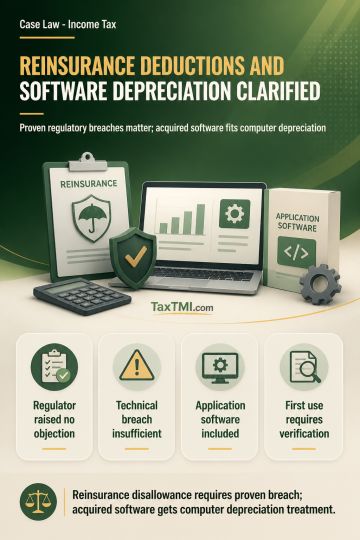
Reinsurance premium deductions require established regulatory breaches, while independently acquired software qualifies within the computer depreciati...
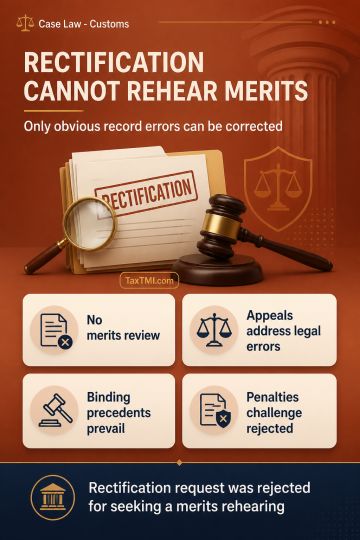
Rectification of mistake remains limited to self-evident record errors, preventing merits review through miscellaneous applications and preserving fin...
Tender creditworthiness conditions may extend to de facto Promoter Directors, with post-participation challenges generally barred absent arbitrariness...
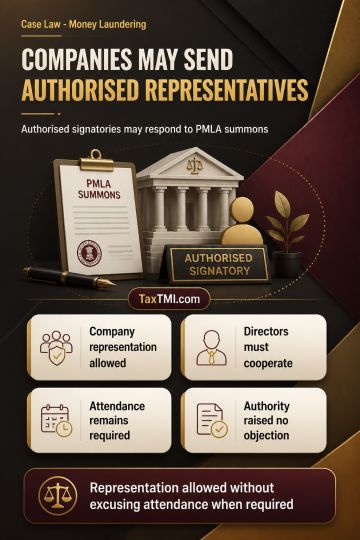
Corporate representation in PMLA summons proceedings permitted through an authorised signatory, subject to directors' continuing cooperation and atten...
Page of 4801
Press 'Enter' after typing page number.
861 to 880 of 96001 Results
❮
❯
❯❯
0 / 200
Expand Note
Add to Folder
No Folders have been created
+
Are you sure you want to delete "My most important" ?
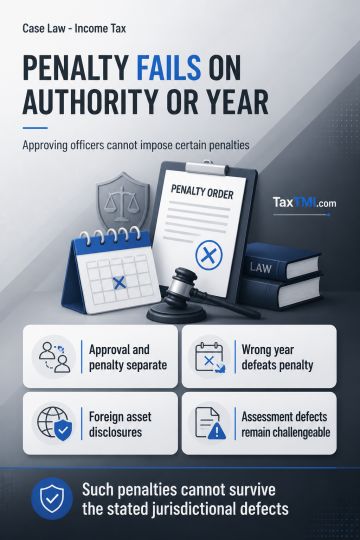
The ITAT examined multiple aspects of a tax penalty case involving undisclosed income. The tribunal found no justification for penalty u/s 271(1)(c) across various income categories including house property, buffer income, and salary. Key determinations included: (1) the complexity of tax law precluded deliberate concealment, (2) residential status dispute undermined penalty proceedings, and (3) penalty orders were time-barred under section 275(1)(c). Critically, the immunity period granted by the Settlement Commission and subsequent legal challenges rendered the penalty unsustainable. The tribunal ultimately upheld the CIT(A)'s order quashing the penalty, dismissing revenue's grounds and finding the penalty proceedings statutorily invalid due to limitation constraints.
The ITAT examined multiple aspects of a tax penalty case involving undisclosed income. The tribunal found no justification for penalty u/s 271(1)(c) across various income categories including house property, buffer income, and salary. Key determinations included: (1) the complexity of tax law precluded deliberate concealment, (2) residential status dispute undermined penalty proceedings, and (3) penalty orders were time-barred under section 275(1)(c). Critically, the immunity period granted by the Settlement Commission and subsequent legal challenges rendered the penalty unsustainable. The tribunal ultimately upheld the CIT(A)'s order quashing the penalty, dismissing revenue's grounds and finding the penalty proceedings statutorily invalid due to limitation constraints.
Note: It is a system-generated summary and is for quick reference only.
 TaxTMI
 of 4801










 Join Channel


 TaxTMI
