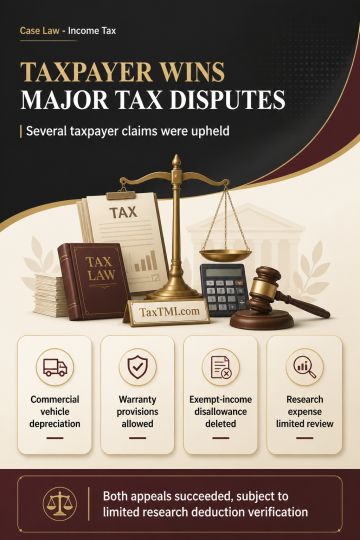
Commercial vehicle depreciation, scientifically determined warranty provisions and exempt-income disallowances were resolved in favour of the taxpayer...
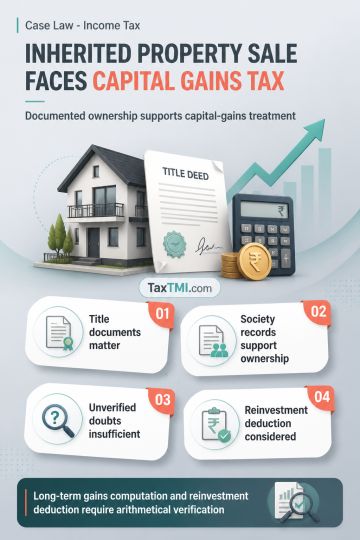
Inherited property sale proceeds require capital-gains treatment where ownership is supported by evidence, not suspicion or unverified signature doubt...
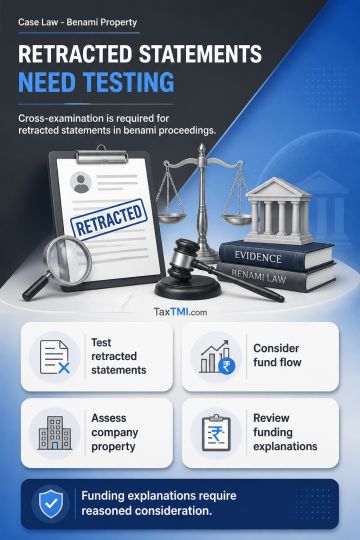
Cross-examination of retracted statements is essential where foundational evidence supports a benami allegation and documented funding explanations re...
Capital-goods exemption covers plant-modernisation accessories, while the import restriction applies only to earlier capital-goods components and spar...
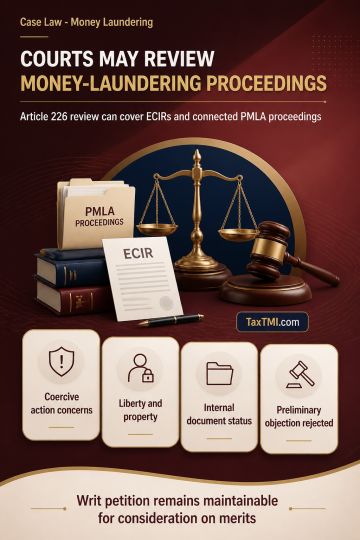
Constitutional judicial review permits challenges to ECIRs and connected money-laundering proceedings where coercive action affects fundamental intere...
The ITAT examined multiple aspects of a tax penalty case involving undisclosed income. The tribunal found no justification for penalty u/s 271(1)(c) across various income categories including house property, buffer income, and salary. Key determinations included: (1) the complexity of tax law precluded deliberate concealment, (2) residential status dispute undermined penalty proceedings, and (3) penalty orders were time-barred under section 275(1)(c). Critically, the immunity period granted by the Settlement Commission and subsequent legal challenges rendered the penalty unsustainable. The tribunal ultimately upheld the CIT(A)'s order quashing the penalty, dismissing revenue's grounds and finding the penalty proceedings statutorily invalid due to limitation constraints.
The ITAT examined multiple aspects of a tax penalty case involving undisclosed income. The tribunal found no justification for penalty u/s 271(1)(c) across various income categories including house property, buffer income, and salary. Key determinations included: (1) the complexity of tax law precluded deliberate concealment, (2) residential status dispute undermined penalty proceedings, and (3) penalty orders were time-barred under section 275(1)(c). Critically, the immunity period granted by the Settlement Commission and subsequent legal challenges rendered the penalty unsustainable. The tribunal ultimately upheld the CIT(A)'s order quashing the penalty, dismissing revenue's grounds and finding the penalty proceedings statutorily invalid due to limitation constraints.
Note: It is a system-generated summary and is for quick reference only.
 TaxTMI
 of 4796











 Join Channel


 TaxTMI
