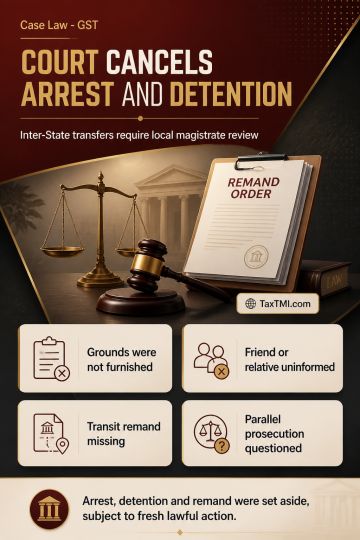
Arrest safeguards and transit remand requirements invalidated detention following inter-State transfer without communicated grounds or magistrate auth...
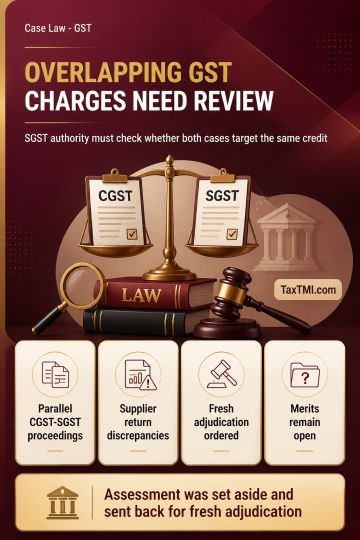
Arrest safeguards require disclosed grounds, relative intimation and transit remand, while duplicate prosecution under the CGST framework is unsustain...
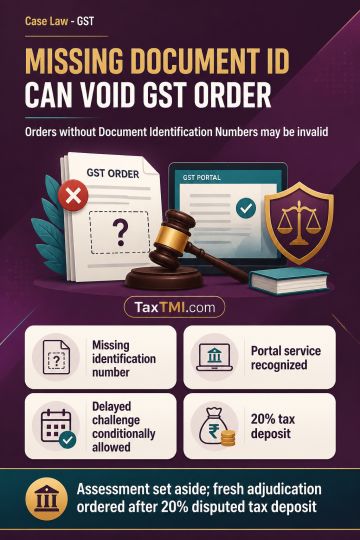
Document Identification Number defects can invalidate GST assessments, with delayed challenges entertained conditionally where patent irregularities e...
Windmill commissioning evidence supported higher depreciation where grid connection and electricity generation proved operational use before the relev...
Page of 4803
Press 'Enter' after typing page number.
781 to 800 of 96046 Results
❮
❯
❯❯
0 / 200
Expand Note
Add to Folder
No Folders have been created
+
Are you sure you want to delete "My most important" ?
CESTAT adjudicated a dispute regarding seized traveller's cheques, finding the customs department's encashment and retention of funds arbitrary. The tribunal determined that the cheques, being non-perishable dollar-denominated instruments, should have been handled with greater procedural care. Critically, the court ruled that the appellant was entitled to interest on the deposited amount from the date of deposit, less redemption fines and penalties, with payment mandated within two months. The decision emphasized preventing unjust enrichment and protecting property rights by recognizing the potential financial loss to the appellant due to unauthorized fund retention. Appeal was allowed, directing monetary compensation to the appellant.
CESTAT adjudicated a dispute regarding seized traveller's cheques, finding the customs department's encashment and retention of funds arbitrary. The tribunal determined that the cheques, being non-perishable dollar-denominated instruments, should have been handled with greater procedural care. Critically, the court ruled that the appellant was entitled to interest on the deposited amount from the date of deposit, less redemption fines and penalties, with payment mandated within two months. The decision emphasized preventing unjust enrichment and protecting property rights by recognizing the potential financial loss to the appellant due to unauthorized fund retention. Appeal was allowed, directing monetary compensation to the appellant.
Note: It is a system-generated summary and is for quick reference only.
 TaxTMI
 of 4803









 Join Channel


 TaxTMI