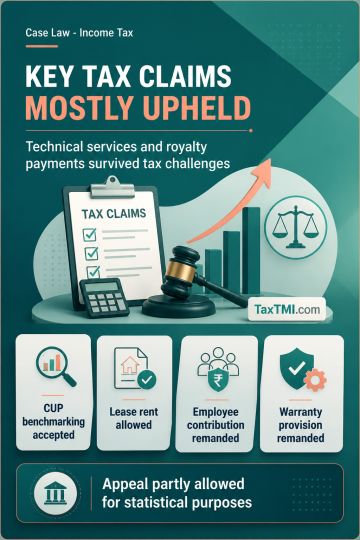
Transfer pricing and tax deductions upheld on established principles, while employee contributions and warranty provisions returned for fresh examinat...
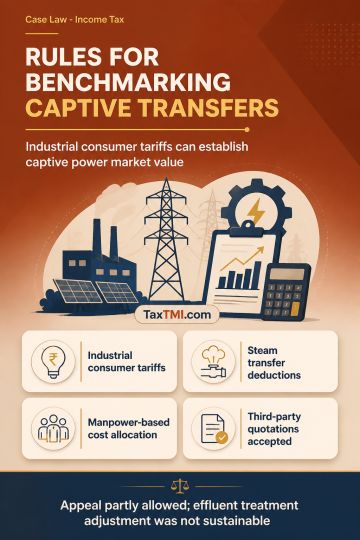
Captive transfer pricing relies on industrial consumer tariffs, while genuine quotations can benchmark effluent treatment transfers under the Other Me...
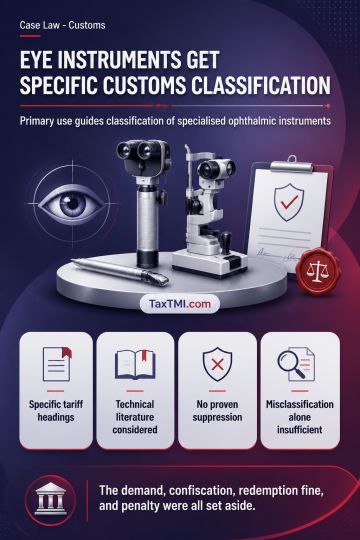
Specific tariff classification for ophthalmic instruments and extended limitation principles determine the treatment of duty demands, confiscation, an...
Integrated golf function determines classification, placing launch monitors and simulators under other golf equipment rather than measuring instrument...
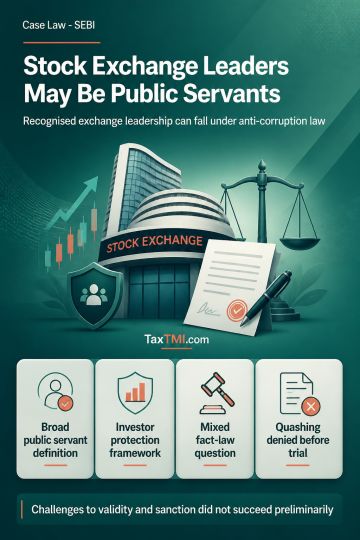
Public servant status under anti-corruption law extends to recognised stock exchange leadership; constitutional and sanction challenges do not succeed...
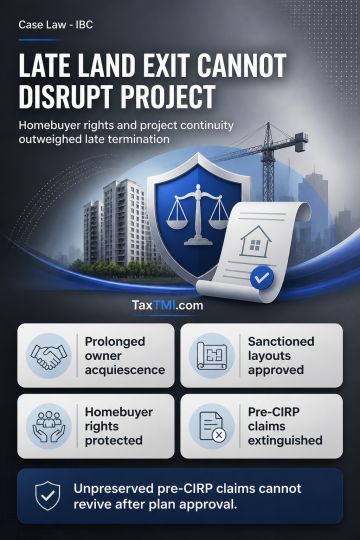
Acquiescence, homebuyer protection and clean-slate resolution principles prevent landowners from disrupting an integrated project through late termina...
SC analyzed a cheque dishonour case under Negotiable Instruments Act Sections 118(a) and 139. The Court held that while presumptions under these sections are rebuttable, the complainant failed to substantiate the claim of an enforceable debt. Despite alleging cheque issuance in presence of well-wishers, no corroborative evidence was produced, such as income tax documents or accounting records. The accused successfully discharged the burden of proof by raising a probable defense. Consequently, the SC upheld the Trial Court's original acquittal order and reversed the High Court's judgment, thereby allowing the appeal in favor of the accused.
SC analyzed a cheque dishonour case under Negotiable Instruments Act Sections 118(a) and 139. The Court held that while presumptions under these sections are rebuttable, the complainant failed to substantiate the claim of an enforceable debt. Despite alleging cheque issuance in presence of well-wishers, no corroborative evidence was produced, such as income tax documents or accounting records. The accused successfully discharged the burden of proof by raising a probable defense. Consequently, the SC upheld the Trial Court's original acquittal order and reversed the High Court's judgment, thereby allowing the appeal in favor of the accused.
Note: It is a system-generated summary and is for quick reference only.
 TaxTMI
 of 4803




 Join Channel


 TaxTMI