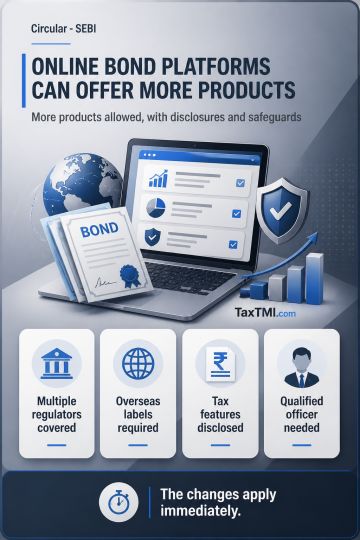
Online bond platforms may offer overseas-regulated products and tax-specific bonds subject to disclosures, compliance safeguards and revised complianc...
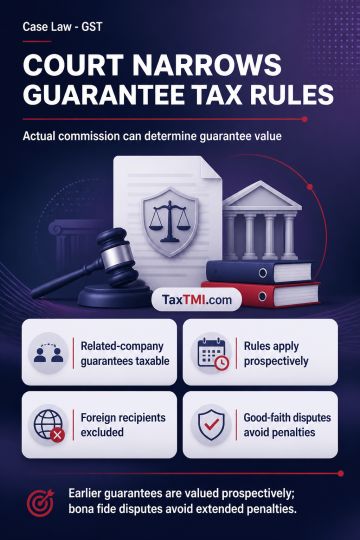
Corporate guarantee valuation permits actual ascertainable commission while barring retroactive application and extended-period penalties for bona fid...
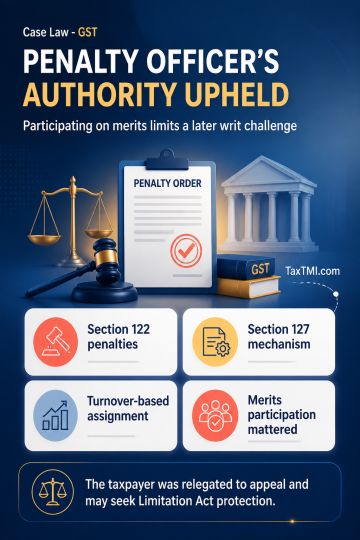
Proper-officer jurisdiction under UPGST penalty provisions upheld; participation on merits prevents bypassing the statutory appellate remedy through w...
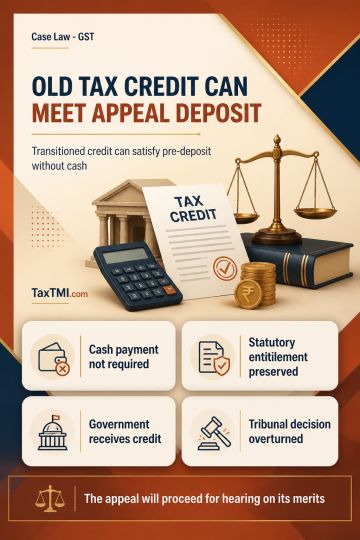
Transitioned CENVAT credit may validly satisfy mandatory pre-deposit requirements for legacy service tax appeals through Electronic Credit Ledger debi...
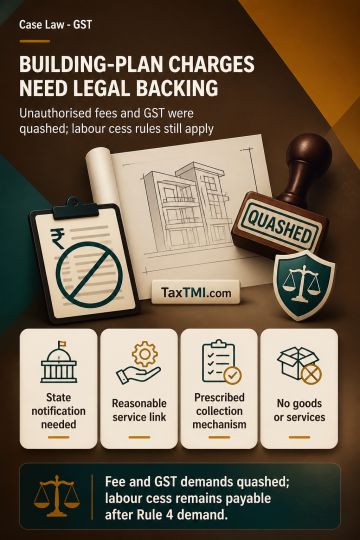
Building-plan sanction charges require statutory authority; unauthorised fees and GST were quashed, while labour cess must follow prescribed collectio...
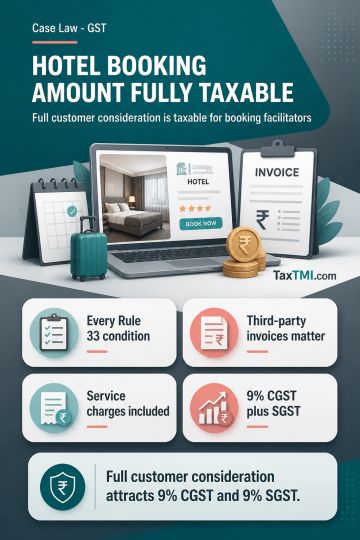
Pure-agent exclusion fails where hotel booking facilitators receive third-party services themselves, making entire customer consideration taxable as r...
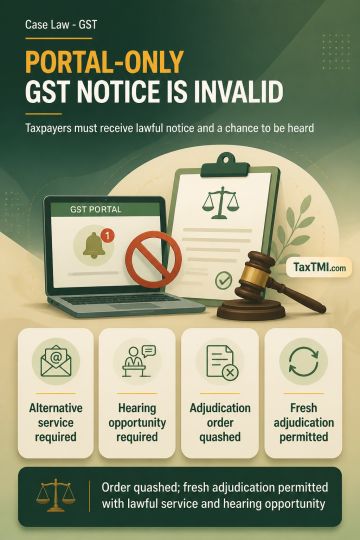
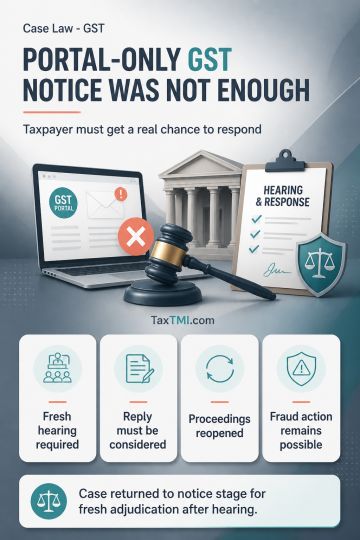
HC held that service of notice/order via common portal is valid...
Electronic Service via Common Portal Legally Valid Under GST Act, Section 169(1)(d) Enables Direct Digital Notification Without Additional Requirements
Contents
Summary
Note
Bookmark
Share
✓ Copied successfully !
Print
Print Options
For full text, please login
Login to TaxTMI
Verification Pending
The Email Id has not been verified. Click on the link we have sent on
HC held that service of notice/order via common portal is valid under GST Act. Section 169(1)(d) independently provides for electronic service through common portal, without requiring additional notification under Section 146. The statutory provision explicitly enables serving decisions, orders, summons, and notices electronically. The petitioner's contention challenging portal-based service was rejected. The court set aside impugned orders, directing petitioner to deposit 25% of disputed taxes within four weeks. The judgment affirms the legal validity of electronic service mechanisms in GST proceedings.
HC held that service of notice/order via common portal is valid under GST Act. Section 169(1)(d) independently provides for electronic service through common portal, without requiring additional notification under Section 146. The statutory provision explicitly enables serving decisions, orders, summons, and notices electronically. The petitioner's contention challenging portal-based service was rejected. The court set aside impugned orders, directing petitioner to deposit 25% of disputed taxes within four weeks. The judgment affirms the legal validity of electronic service mechanisms in GST proceedings.
Note: It is a system-generated summary and is for quick reference only.
 TaxTMI
 of 4800






 Join Channel


 TaxTMI