Retention of seized property survives where recorded reasons support proceeds of crime, while stayed investigation periods are excluded from limitatio...
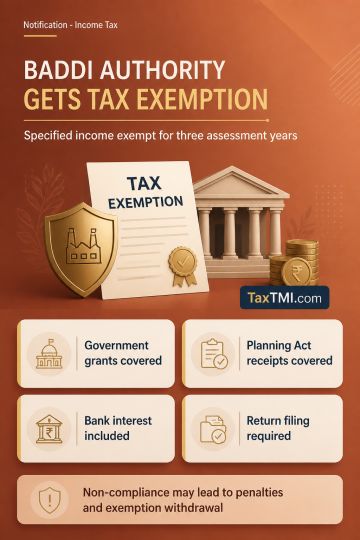
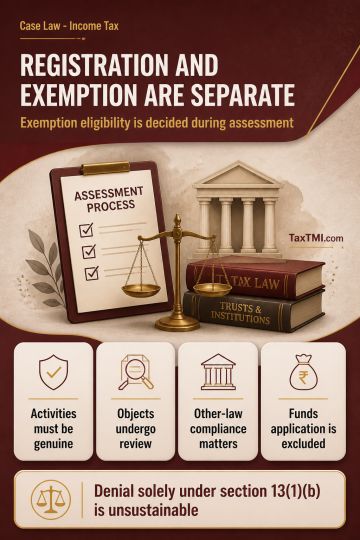
Specified income of Baddi Barotiwala Nalagarh Development Authority receives conditional tax exemption, retrospectively covering its designated assess...
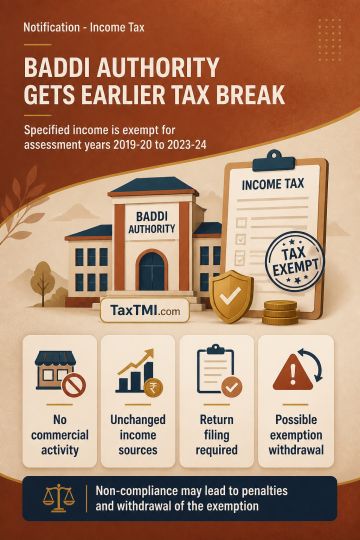
Specified development authority income receives retrospective tax exemption, subject to non-commercial activity, unchanged income sources, and return-...
Unified Brand India framework introduces voluntary Trust Mark certification and funding support for export branding, packaging and global promotional ...
Origin Declaration authentication governs preferential tariff claims under India-UK CETA, requiring a validated reference number before import clearan...
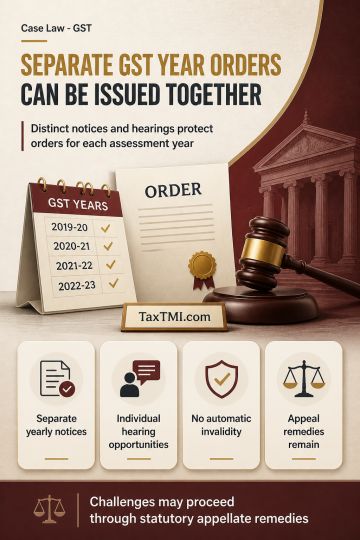
Separate assessment orders for different years remain valid when distinct notices and hearing opportunities prevent prejudice from combined proceeding...
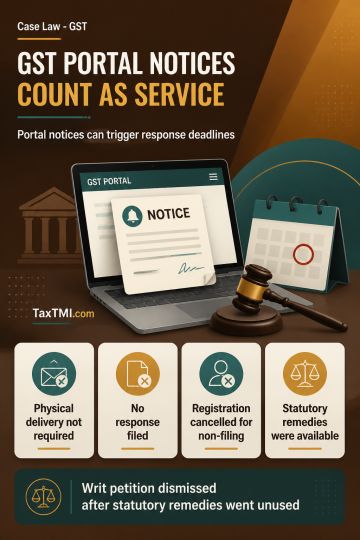
HC held that service of notice/order via common portal is valid...
Electronic Service via Common Portal Legally Valid Under GST Act, Section 169(1)(d) Enables Direct Digital Notification Without Additional Requirements
Contents
Summary
Note
Bookmark
Share
✓ Copied successfully !
Print
Print Options
For full text, please login
Login to TaxTMI
Verification Pending
The Email Id has not been verified. Click on the link we have sent on
HC held that service of notice/order via common portal is valid under GST Act. Section 169(1)(d) independently provides for electronic service through common portal, without requiring additional notification under Section 146. The statutory provision explicitly enables serving decisions, orders, summons, and notices electronically. The petitioner's contention challenging portal-based service was rejected. The court set aside impugned orders, directing petitioner to deposit 25% of disputed taxes within four weeks. The judgment affirms the legal validity of electronic service mechanisms in GST proceedings.
HC held that service of notice/order via common portal is valid under GST Act. Section 169(1)(d) independently provides for electronic service through common portal, without requiring additional notification under Section 146. The statutory provision explicitly enables serving decisions, orders, summons, and notices electronically. The petitioner's contention challenging portal-based service was rejected. The court set aside impugned orders, directing petitioner to deposit 25% of disputed taxes within four weeks. The judgment affirms the legal validity of electronic service mechanisms in GST proceedings.
Note: It is a system-generated summary and is for quick reference only.
 TaxTMI
 of 4805











 Join Channel


 TaxTMI
