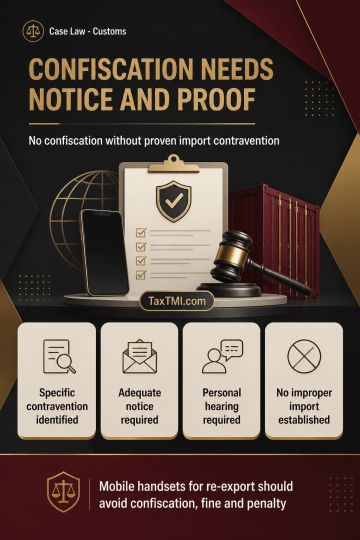
Arrest safeguards require disclosed grounds, relative intimation and transit remand, while duplicate prosecution under the CGST framework is unsustain...
Document Identification Number defects can invalidate GST assessments, with delayed challenges entertained conditionally where patent irregularities e...
Windmill commissioning evidence supported higher depreciation where grid connection and electricity generation proved operational use before the relev...
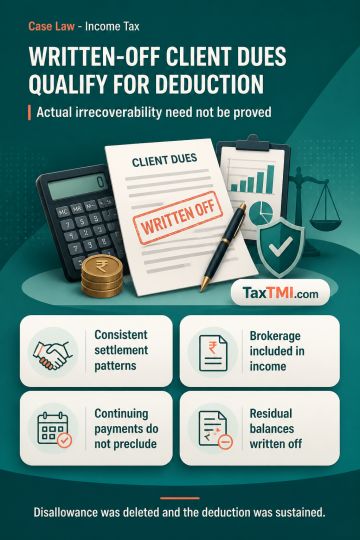
Pharmaceutical promotion and transfer-pricing comparability principles limited disallowances, while uncorroborated search allegations and unsupported ...
Business expenditure substantiation supports scrap credits, statutory payments and expense claims, while depreciation requires proof of actual busines...
HC held that service of notice/order via common portal is valid...
Electronic Service via Common Portal Legally Valid Under GST Act, Section 169(1)(d) Enables Direct Digital Notification Without Additional Requirements
Contents
Summary
Note
Bookmark
Share
✓ Copied successfully !
Print
Print Options
For full text, please login
Login to TaxTMI
Verification Pending
The Email Id has not been verified. Click on the link we have sent on
HC held that service of notice/order via common portal is valid under GST Act. Section 169(1)(d) independently provides for electronic service through common portal, without requiring additional notification under Section 146. The statutory provision explicitly enables serving decisions, orders, summons, and notices electronically. The petitioner's contention challenging portal-based service was rejected. The court set aside impugned orders, directing petitioner to deposit 25% of disputed taxes within four weeks. The judgment affirms the legal validity of electronic service mechanisms in GST proceedings.
HC held that service of notice/order via common portal is valid under GST Act. Section 169(1)(d) independently provides for electronic service through common portal, without requiring additional notification under Section 146. The statutory provision explicitly enables serving decisions, orders, summons, and notices electronically. The petitioner's contention challenging portal-based service was rejected. The court set aside impugned orders, directing petitioner to deposit 25% of disputed taxes within four weeks. The judgment affirms the legal validity of electronic service mechanisms in GST proceedings.
Note: It is a system-generated summary and is for quick reference only.
 TaxTMI
 of 4805




















 Join Channel


 TaxTMI