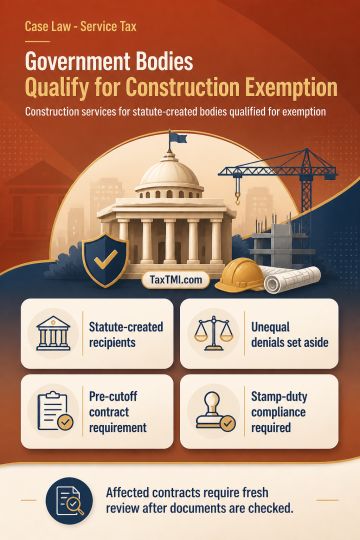
Governmental authority status supports construction-service exemption, while pre-cutoff contract and stamp-duty compliance requires verification on re...
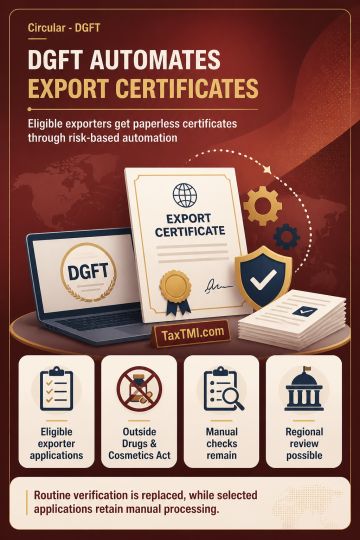
Automated Free Sale and Commerce Certificates enable paperless processing while retaining risk-based manual verification for selected exporter applica...
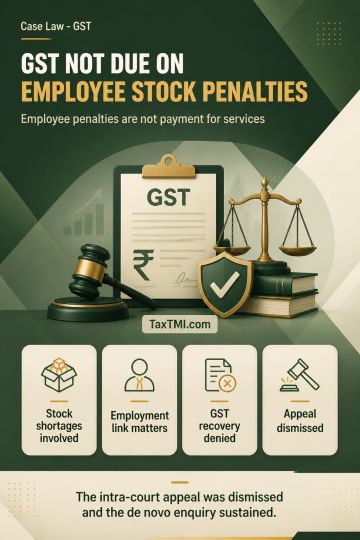
Employee stock-shortage penalties do not constitute consideration for services, preventing GST collection under Schedule II in employment relationship...
HC determined that salary paid to a related party was reasonable and commensurate with qualifications and services rendered. The court interpreted Section 13(1)(c) to mean that if compensation is objectively reasonable for services performed, it cannot be deemed as improper diversion of trust income to a prohibited person. Payments meeting standard market rates for legitimate services do not automatically trigger tax liability or disqualify charitable trust exemptions. The court rejected Revenue's argument that any payment to a related party inherently constitutes income diversion, instead focusing on the substantive reasonableness of compensation. Consequently, the ruling favored the assessee, maintaining the trust's tax-exempt status.
HC determined that salary paid to a related party was reasonable and commensurate with qualifications and services rendered. The court interpreted Section 13(1)(c) to mean that if compensation is objectively reasonable for services performed, it cannot be deemed as improper diversion of trust income to a prohibited person. Payments meeting standard market rates for legitimate services do not automatically trigger tax liability or disqualify charitable trust exemptions. The court rejected Revenue's argument that any payment to a related party inherently constitutes income diversion, instead focusing on the substantive reasonableness of compensation. Consequently, the ruling favored the assessee, maintaining the trust's tax-exempt status.
Note: It is a system-generated summary and is for quick reference only.
 TaxTMI
  TaxTMI
 of 4828





 Join Channel


