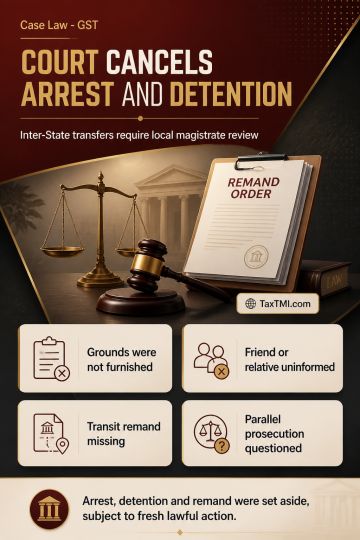
Arrest safeguards and transit remand requirements invalidated detention following inter-State transfer without communicated grounds or magistrate auth...
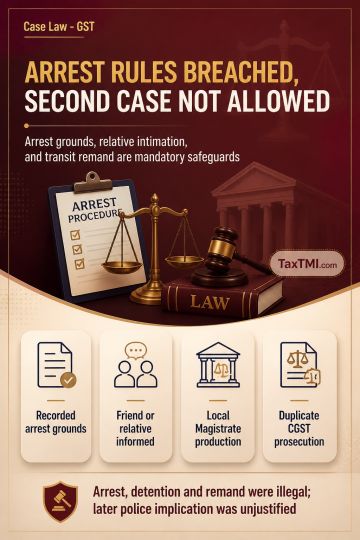
Arrest safeguards require disclosed grounds, relative intimation and transit remand, while duplicate prosecution under the CGST framework is unsustain...
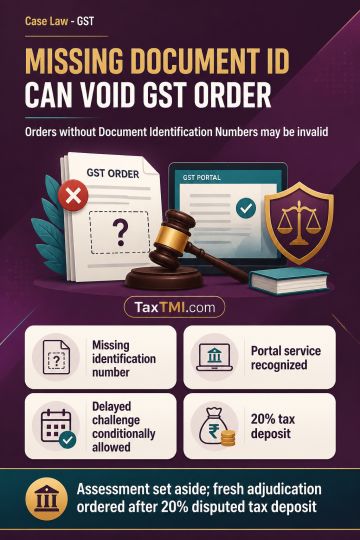
Document Identification Number defects can invalidate GST assessments, with delayed challenges entertained conditionally where patent irregularities e...
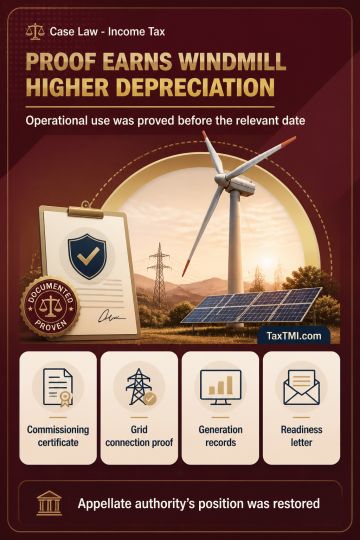
Windmill commissioning evidence supported higher depreciation where grid connection and electricity generation proved operational use before the relev...
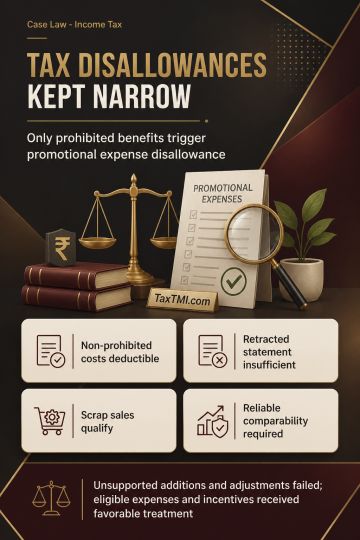
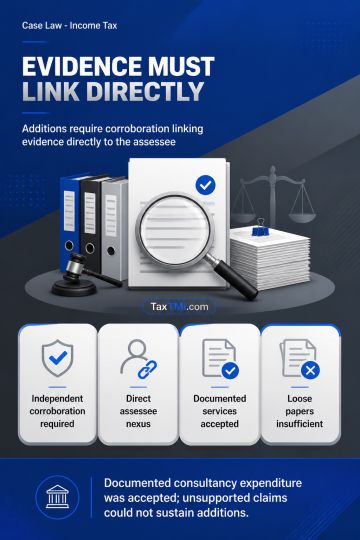
Pharmaceutical promotion and transfer-pricing comparability principles limited disallowances, while uncorroborated search allegations and unsupported ...
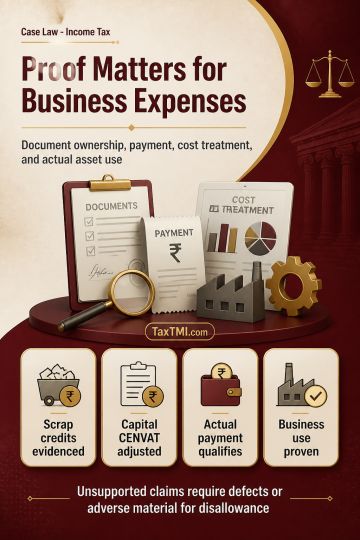
Business expenditure substantiation supports scrap credits, statutory payments and expense claims, while depreciation requires proof of actual busines...
Sales Tax Subsidy Classification and Tax Implications The ITAT upheld the capital nature of a sales tax subsidy received from state governments. The tribunal directed the Assessing Officer (AO) to recalculate depreciation by reducing the subsidy amount from fixed asset costs under Explanation 10 to Section 43(1). The SC previously affirmed the subsidy's capital classification. The tribunal rejected revenue's contentions regarding book profit computation under Section 115JB, emphasizing that the AO lacks authority to modify book profits absent fraud or non-compliance with Companies Act provisions. The subsidy, directly credited to capital reserve and not impacting profit and loss account, cannot be adjusted in book profit calculations. Appeals filed by revenue were dismissed, and the Co-ordinate Bench's directions for depreciation re-computation were upheld.
Sales Tax Subsidy Classification and Tax Implications The ITAT upheld the capital nature of a sales tax subsidy received from state governments. The tribunal directed the Assessing Officer (AO) to recalculate depreciation by reducing the subsidy amount from fixed asset costs under Explanation 10 to Section 43(1). The SC previously affirmed the subsidy's capital classification. The tribunal rejected revenue's contentions regarding book profit computation under Section 115JB, emphasizing that the AO lacks authority to modify book profits absent fraud or non-compliance with Companies Act provisions. The subsidy, directly credited to capital reserve and not impacting profit and loss account, cannot be adjusted in book profit calculations. Appeals filed by revenue were dismissed, and the Co-ordinate Bench's directions for depreciation re-computation were upheld.
Note: It is a system-generated summary and is for quick reference only.
 TaxTMI
 of 4790




 Join Channel


 TaxTMI
